
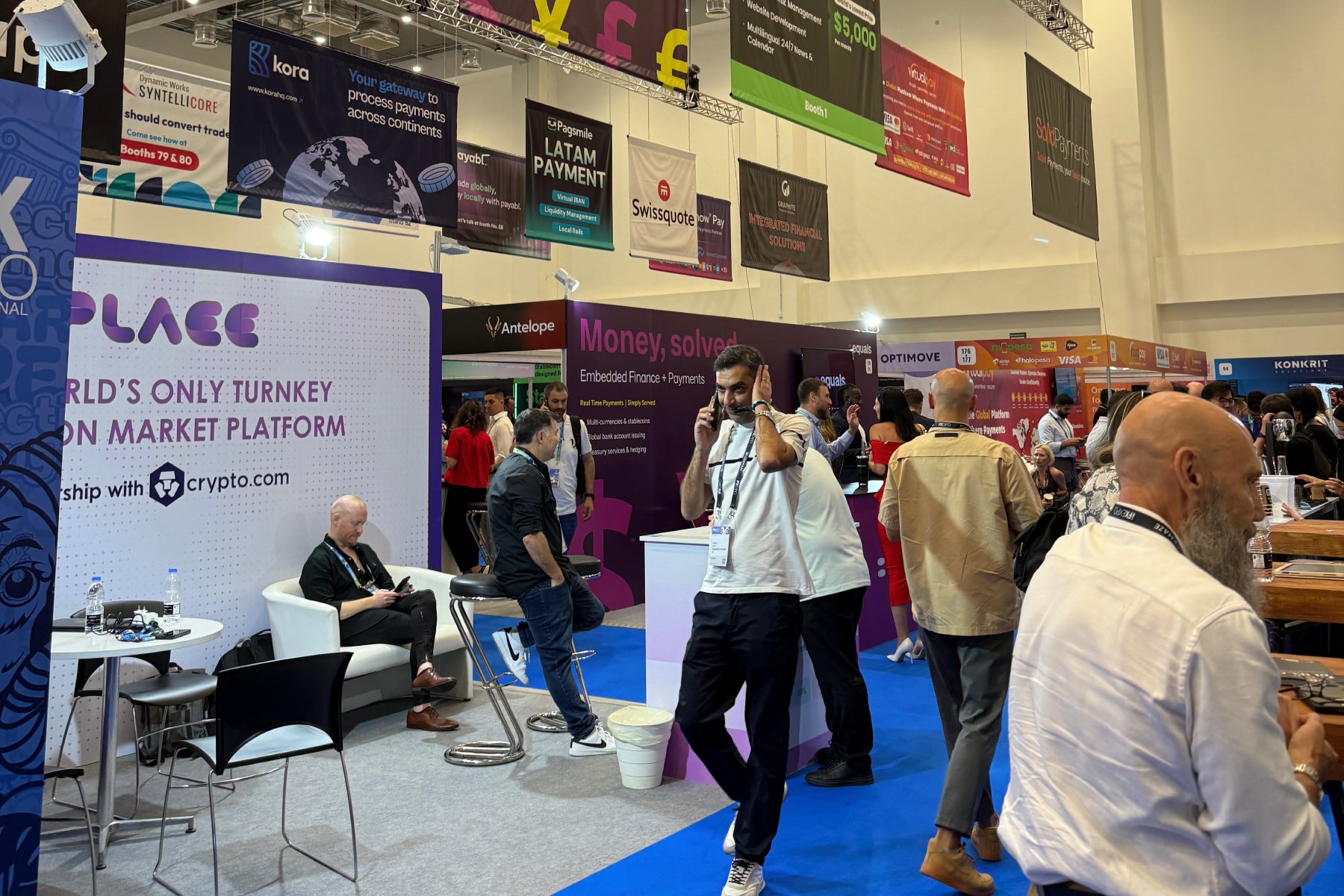
From June 16–18, our representative, Ondřej Mikulčík, attended the conference iFX EXPO International 2026, which took place in Limassol, Cyprus. This is one of the most significant conferences focused on online trading, fintech, brokerage, and related technological solutions.
For us, participation was interesting not only due to the professional program but also because of the composition of exhibitors and visitors. Cyprus is located on the eastern edge of the European Union and has long been an important hub for brokers, trading platforms, payment companies, and other players in the capital markets sector. As a result, the conference offered the opportunity to meet many companies and experts who do not frequently appear at typical fintech events in Central Europe.
In this article, we will share with you the most interesting trends and insights we brought back from Limassol.
iFX EXPO International differs from many traditional fintech conferences in its strong connection to the world of brokers, trading platforms, investment services, liquidity, payments, and client acquisition. There was less discussion about banking itself and more about the specific business models behind online trading, investment platforms, and the global movement of money.
This combination makes iFX EXPO an interesting insight into a segment of the fintech market that is less visible in our region but holds immense global significance.
One of the surprisingly interesting points on the agenda was the presentation "Driving Performance: Scaling Finance Ads with TikTok Solutions," led directly by a TikTok representative. At first glance, TikTok might not seem like a natural marketing channel for fintech, wealthtech, or brokerage firms. The platform is often primarily associated with younger audiences, entertainment, and fast-paced content.
This is precisely why the presentation was so interesting. It showed that TikTok is gradually moving into areas where many companies wouldn't have taken it seriously just a few years ago. Users there are not only looking for entertainment but also educational content, financial topics, investment inspiration, or explanations of complex products in a simpler format.
For financial brands, an important conclusion emerges: TikTok doesn't have to be just a tool for building awareness among Gen Z. With the right creative setup, targeting, and performance campaigns, it can also be a relevant channel for client acquisition. Especially in segments where it's necessary to explain a product, build trust, and simultaneously work with content in a format that feels natural to users.
This doesn't mean TikTok will be suitable for every financial firm. However, it shows that it can no longer be automatically dismissed as a channel unsuitable for serious finance.
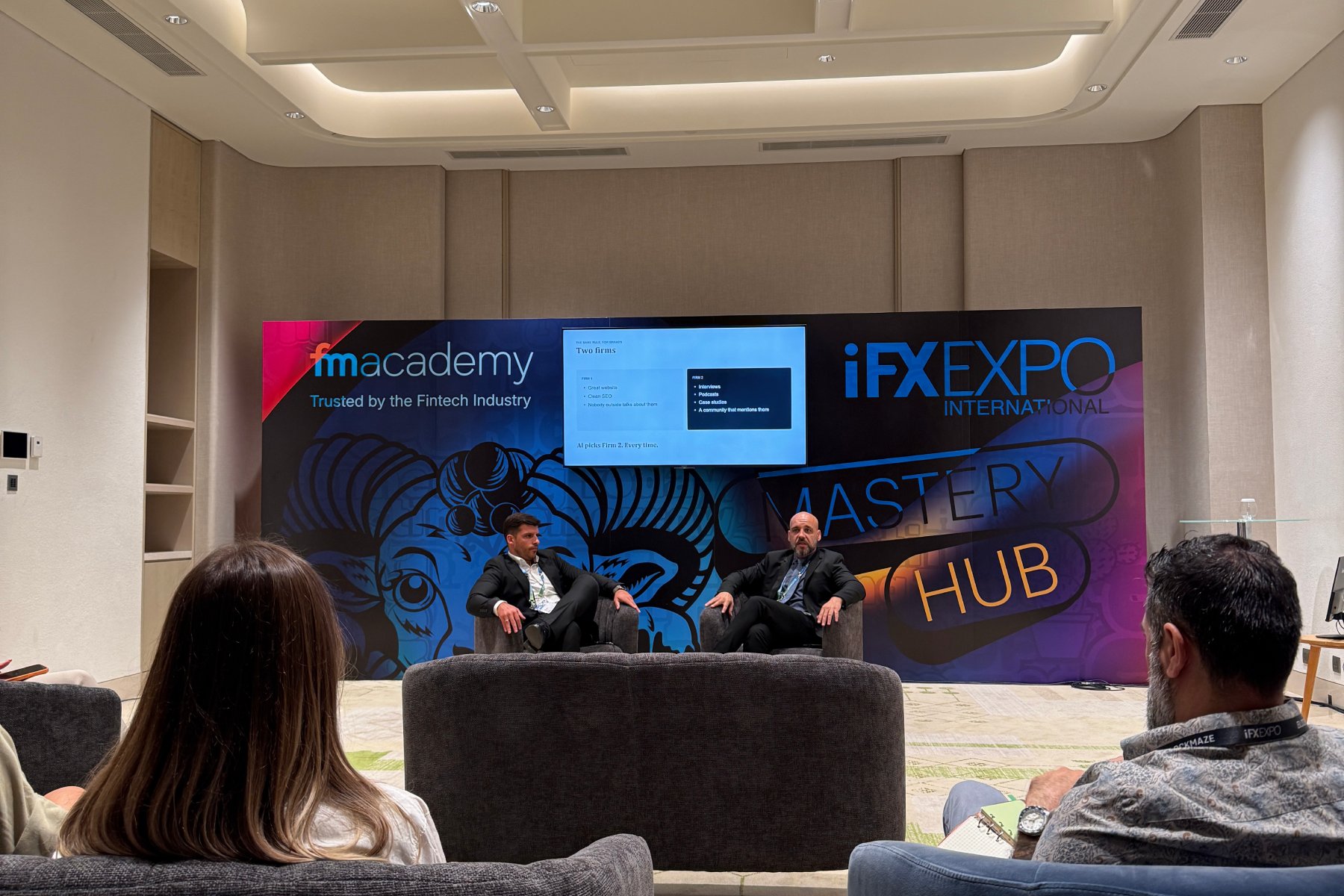
Another prominent topic on the agenda concerned the impact of artificial intelligence on brand visibility. The presentation "If AI Can Recommend Your Brand, It Can Ignore It Too" focused on how search is changing in the era of large language models.
The basic idea is simple: if users increasingly ask tools like ChatGPT, Gemini, or Perplexity what product, platform, or service they should choose, it's no longer enough for companies to think only about traditional SEO. A brand must become sufficiently understandable, trustworthy, and authoritative even for AI systems that select, summarize, and recommend information.
The presentation revealed that good visibility in AI responses doesn't actually differ much from the principles of quality SEO and long-term brand building. Companies must clearly communicate what they do, for whom they do it, and why they are relevant. They need to have authority not only on their own website but also on social media, in the media, industry databases, and other websites that write about them independently.
For fintech and wealthtech firms, this is particularly important because their products tend to be complex, regulated, and often very similar to competing solutions. If a brand doesn't explain its value clearly enough, AI might simply bypass it in the future. Not because it's bad, but because there won't be enough clear and trustworthy signals for it.
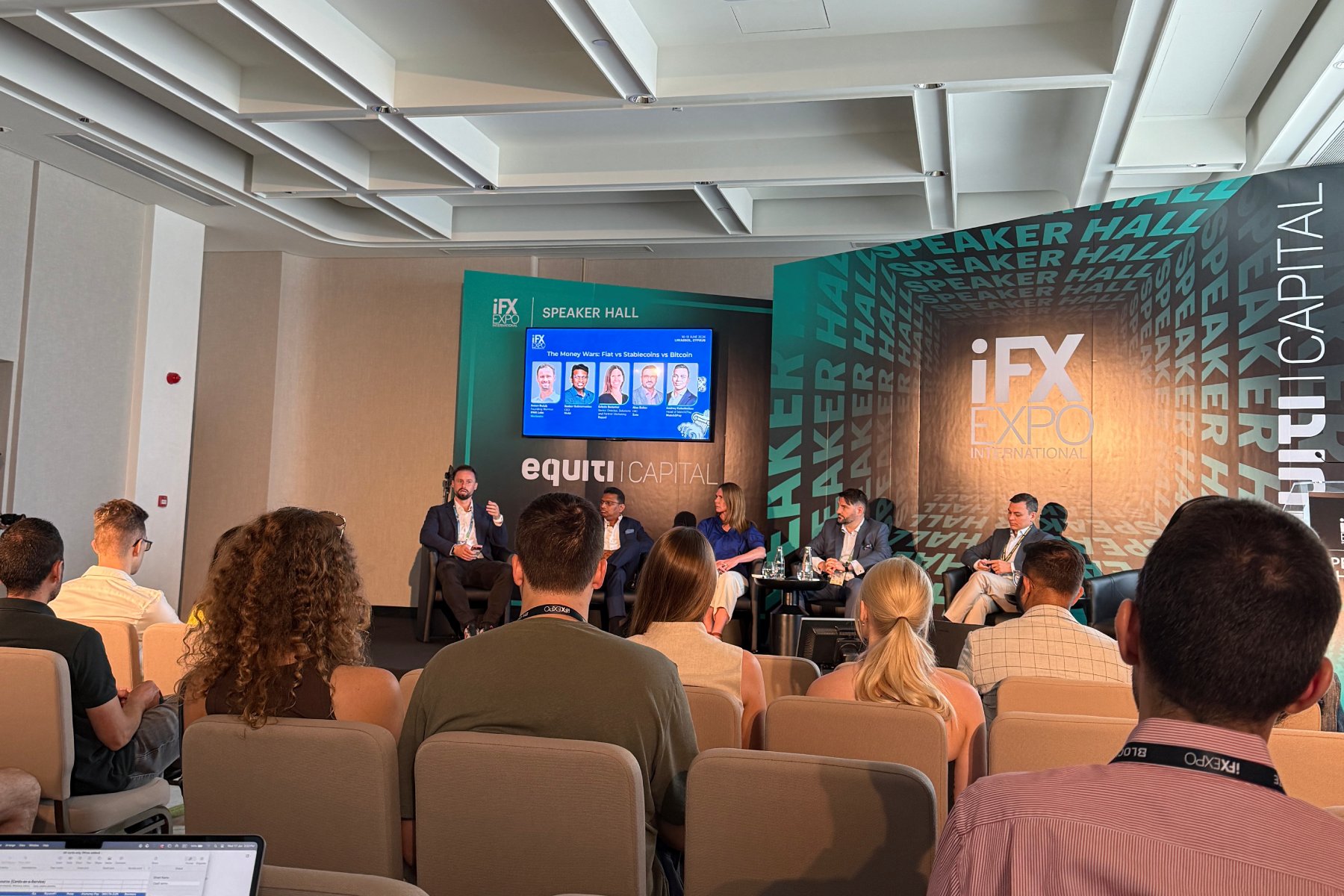
A particularly interesting part of the program was also the panel discussion "The Money Wars: Fiat vs Stablecoins vs Bitcoin." It became clear from this that stablecoins are no longer seen merely as a crypto topic or a tool for traders on exchanges. They are increasingly being discussed as a practical payment and settlement tool, especially in cross-border trade.
The discussion highlighted that stablecoins are starting to gain an edge over both Bitcoin and traditional fiat payments in some use cases. Compared to Bitcoin, they offer more stable value and better usability for everyday financial operations. Compared to parts of the traditional payment infrastructure, they can be faster, more accessible, and more efficient for international transfers.
This doesn't mean that stablecoins will immediately replace bank transfers, card schemes, or traditional currencies. Rather, it shows that they are finding a specific niche where traditional infrastructure encounters slowness, costs, or complexity in cross-border settlement.
We have already written about the growing importance of stablecoins in our Action Plan document. iFX EXPO further confirmed this trend: digital assets are not a dead topic; they are merely shifting from the realm of speculation to that of concrete infrastructure.
iFX EXPO International 2026 presented fintech and wealthtech from a slightly different perspective than what we are used to in Central Europe. Less theory, more results. Fewer general debates about digitalization, more concrete solutions for trading, payments, client acquisition, and global financial infrastructure.
The strongest insights from the conference can be summarized in a few points. TikTok is becoming a more relevant channel even for financial services than it might seem at first glance. AI is fundamentally changing how people discover brands and choose financial products. Stablecoins are shifting from a speculative topic to a practical tool for cross-border payments. And wealthtech, brokerage, and online trading remain areas where technology, regulation, marketing, and global capital are converging very rapidly.
Participation in the conference was valuable not only for its program but also for the opportunity to gain insight into an ecosystem that is culturally and commercially different from that of Central Europe. It is precisely these differences that often best indicate where the entire market might be heading in the coming years.