
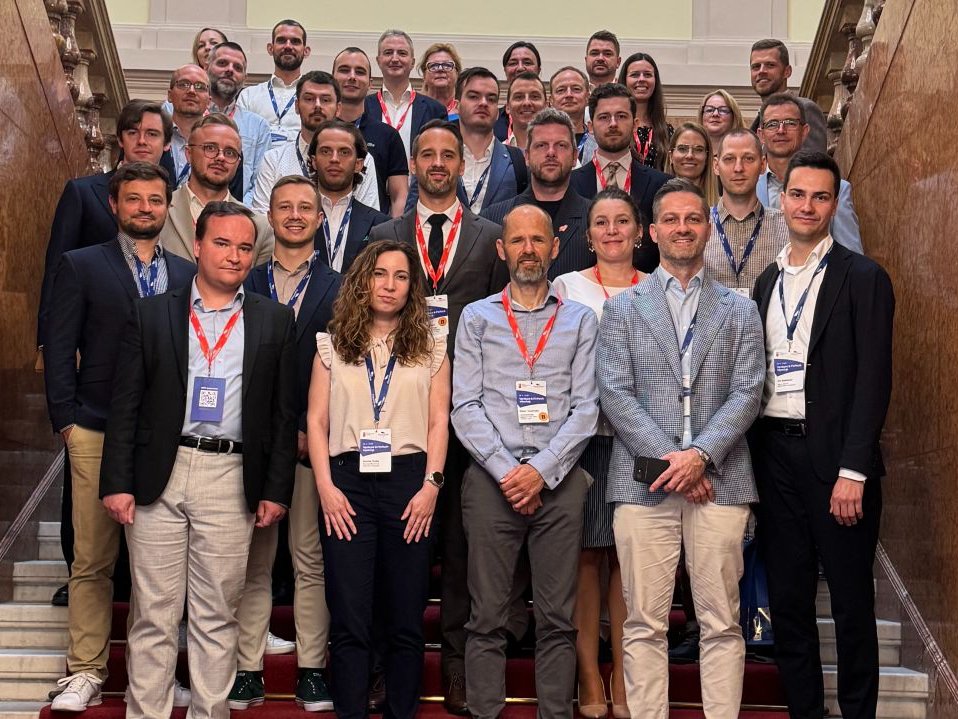
Ondřej Mikulčík represented us at the Venture & FinTech MeetUp business mission in Hungary, which took place on June 10–11 in Budapest, organized by CzechTrade. The program focused on fostering connections between Czech startups, fintech companies, and technology firms on one side, and Hungarian investors, banks, associations, and other key players in the local ecosystem on the other.
From the perspective of Czech fintechs, Hungary is often an overlooked market. When expanding, companies typically look more towards Western Europe, or perhaps Poland or the Baltics. However, Budapest shows that it can be much more interesting than it first appears. It offers a relatively close market, a growing technological ecosystem, openness to foreign partners, and the ambition to become one of Central Europe's innovation hubs.
In this article, we will share with you the most interesting trends and insights we gathered from our mission to Hungary.
One of the strongest impressions from the entire mission was Hungary's ambition to position itself as a place where capital, technology, regulation, and international trade converge. This isn't just about general declarations. Hungary is actively working to create conditions that can be attractive to technology companies and startups from a purely practical standpoint.
An important part of this strategy includes tax incentives for research and development. The Hungarian tax system, under certain conditions, allows for various forms of R&D support, including corporate tax relief, local tax benefits, innovation contributions, and costs associated with employing researchers. For companies developing their own technology, such an environment can be a significant factor when deciding where to expand part of their team or new projects.
This is particularly interesting for Czech fintechs because Hungary doesn't just want to be another sales market. It aims to act as a technological and innovation base from which the wider region can be served. If this ambition proves true in practice, Budapest could play a more significant role in the regional fintech landscape in the coming years.
A very interesting topic was also the discussion on how to practically connect the Czech and Hungarian markets. On paper, they are two close Central European economies, but in practice, they often encounter language and cultural barriers. This is where Slovakia's interesting role emerges.
Many Slovaks understand Hungarian or operate in an environment that is culturally and commercially closer to Hungary than the Czech market. At the same time, they also understand the Czech environment very well. This allows Slovak partners, managers, or consultants to act as a natural bridge between the three markets: Czechia, Slovakia, and Hungary.
For fintech companies expanding, this detail is more important than it might seem. Entering a new market isn't just about product, regulation, and price. Often, success hinges on the ability to correctly interpret local business culture, build trust, and understand who the truly relevant partners are. This is precisely where the Czech-Slovak-Hungarian axis can be very strong.
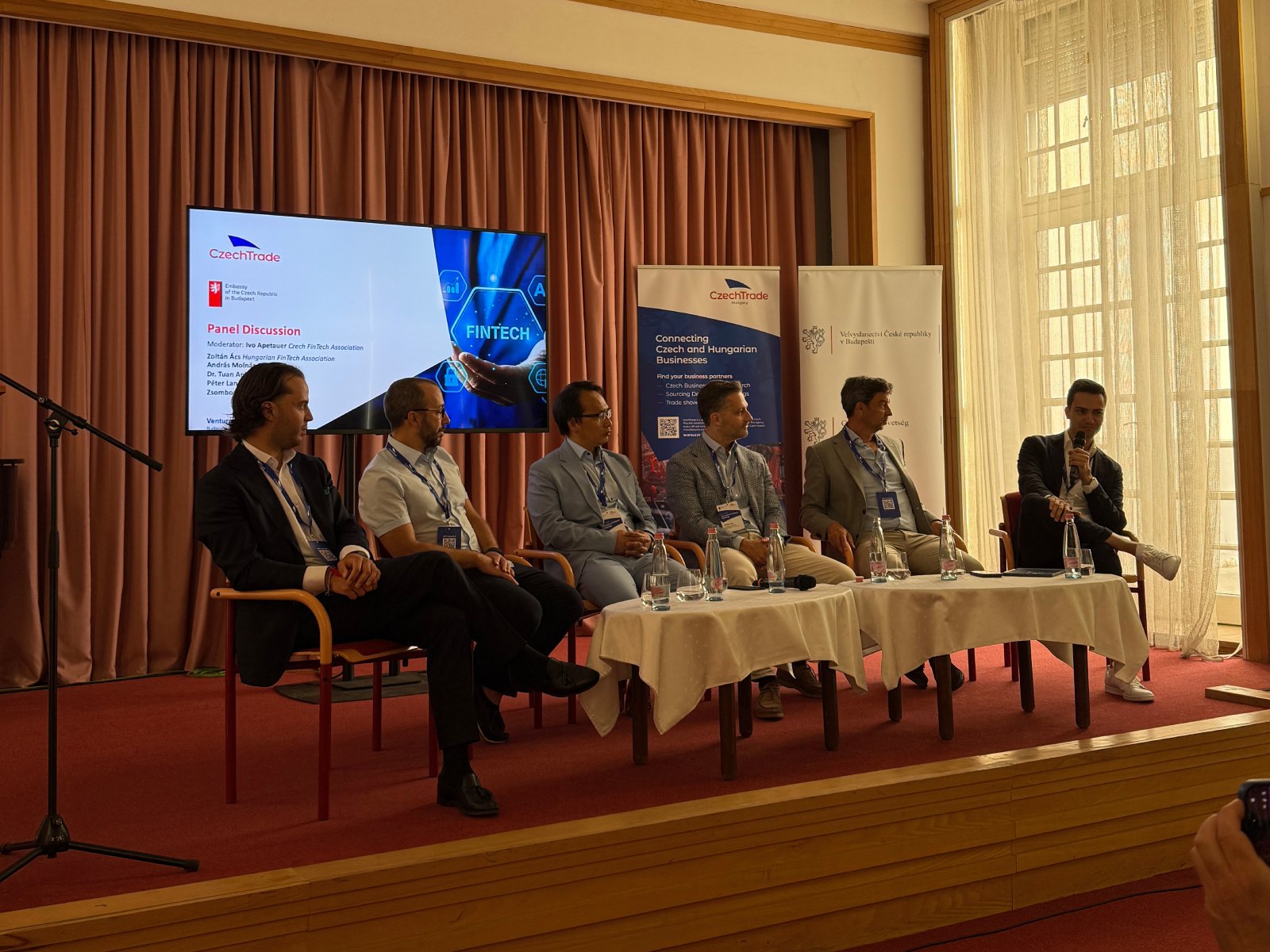
Another important observation from the mission was the interest of Hungarian venture capital firms in Czech fintechs. The Czech market has a good reputation in the region, particularly due to the technical quality of its companies, their ability to build functional products, and their experience with a demanding yet relatively small domestic market.
Czech fintechs can be attractive to Hungarian investors precisely because they often already have a proven product, initial customers, and a clearer idea of how to scale regionally. At the same time, they are not as distant as companies from Western Europe or the USA. They share similar experiences with regional fragmentation, local regulation, banking infrastructure, and the necessity of building products for markets that are not inherently enormous.
From a Czech perspective, it's important that Hungarian capital isn't just a source of funding. It can also bring contacts, local market knowledge, and a pathway to other partners in Central and Southeast Europe.
An interesting topic was also the discussion at Deloitte Hungary, where there was a strong belief that the traditional financial system could partially shift to blockchain infrastructure in the future. This wasn't about enthusiastically repeating old crypto slogans, but rather viewing blockchain as a technological layer for more efficient settlement, tokenization, asset registration, or cross-border financial operations.
This is an important shift. In the past, blockchain was often presented as an alternative to the traditional financial system. Today, there's increasing talk that it can be a part of it. Not necessarily visible to the end-user, but crucial for the underlying infrastructure.
For fintech and wealthtech, this is a crucial topic. If a portion of financial assets, transactions, or settlement processes truly shifts to new technological layers, it will open up space for new products, new types of infrastructure, and new players. At the same time, however, it will require integration with the regulations, banks, and institutions that currently hold the financial system together.

Another prominent theme was Hungary's effort to position itself as a bridge between the European Union and Middle Eastern countries. Hungary is actively engaging with these markets and aims to be a gateway to the EU for some companies from this region.
This is interesting for Czech companies for two reasons. Firstly, it can bring capital, partners, and companies to Hungary that would otherwise have more difficulty entering Central Europe. Secondly, it can open an indirect path for Czech fintechs looking for contacts outside the EU, while still wanting to remain anchored in the European regulatory environment.
Budapest could thus become a place where companies from Central Europe, Western Europe, the Middle East, and other regions meet. If this role continues to strengthen, it could be beneficial for Czech fintechs to be involved sooner, before Hungary becomes an overcrowded and significantly more competitive market.
The Venture & FinTech MeetUp mission to Hungary showed that Budapest is not just another city on the map of Central Europe. For fintech and technology companies, it can represent a practical opportunity to establish contacts with investors, banks, associations, and partners interested in regional cooperation.
The strongest insights from the mission can be summarized in several points. Hungary aims to be an innovation hub and supports technology companies, including through R&D incentives. The Czech and Hungarian markets can be very well connected by the Slovak element, which helps bridge linguistic and cultural differences. Hungarian venture capital funds perceive Czech fintechs as an attractive investment opportunity. Blockchain is returning to the institutional environment as a potential technological core of future financial infrastructure. And Hungary is also striving to act as a gateway to the European Union for Middle Eastern countries.
For Czech fintechs, a simple conclusion follows: Hungary should not be overlooked. It is not a market that would automatically replace Western Europe or Poland. However, it can very well complement the regional strategy of companies looking to grow in CEE, seeking new investors, banking partners, or a path to a broader international ecosystem.
Budapest is closer than it seems. And based on what we saw on site, it's worth keeping an eye on.