

The cryptocurrency sector has reached the most critical crossroads of its existence, and the narrative of the imminent "future of finance" is showing serious cracks. The current deep price slump and prolonged investor apathy in 2026 are no longer just a manifestation of the typical cyclicality this volatile market was accustomed to. We are witnessing a profound structural crisis of legitimacy and the exhaustion of existing narratives. The era of cheap money and zero interest rates has definitively ended. In this new environment of rigid monetary policy, it has become clear that digital assets, led by Bitcoin, have so far failed in their role as a stable macroeconomic hedge against inflation, behaving instead like a highly correlated speculative bet.
Let’s be honest: this harsh lesson is not a death sentence for crypto, but rather an inevitable coming-of-age. The internet sector went through a similarly painful catharsis during the dot-com bubble burst at the turn of the millennium, as did the railway builders in the 19th century. The following chart of total market capitalization is an exact quantitative expression of this exodus of speculative capital. Therefore, let’s strip away the marketing sentiment and false optimism to analyze the key fundamental anomalies, systemic flaws, and evolutionary challenges that are currently dragging crypto assets down while simultaneously shaping their new, more professional form.
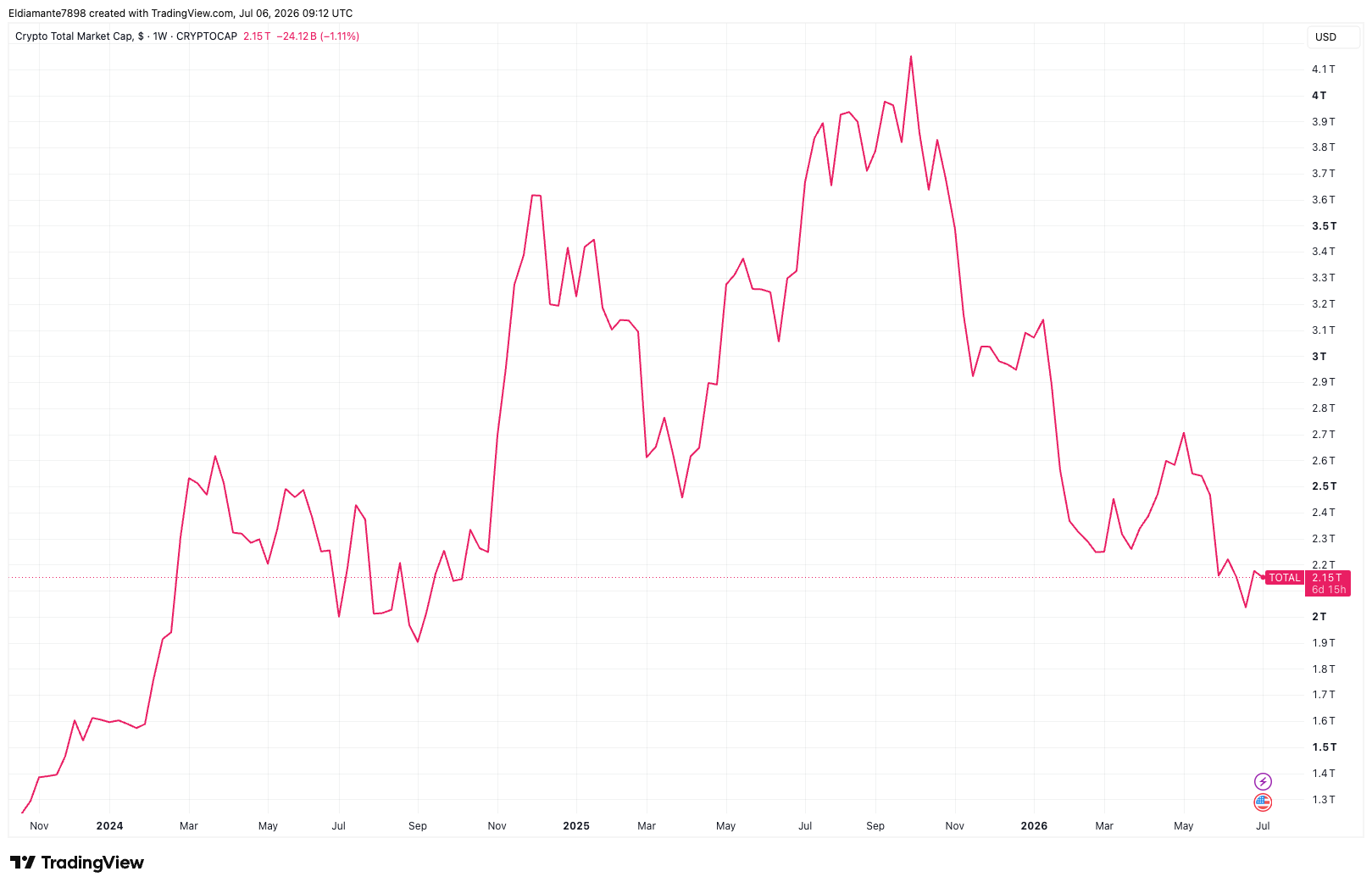
Source: TradingView
One of the biggest structural problems that the cryptocurrency industry has long masked is the illusion that holding a token is equivalent to owning a stake in a project. In the traditional financial world, buying shares grants you clearly defined property and voting rights, a share of profits, and, above all, protection under corporate law. In crypto, however, the vast majority of retail investors hold only so-called "utility" or "loyalty" tokens. In the current legal vacuum, these tokens mean nothing at all. When push comes to shove, founders and VC investors cash out millions from the sale of corporate structures (equity), while ordinary token holders are left trapped with worthless tokens.
This critical lack of protection is being addressed by the American Digital Asset Market Clarity Act (CLARITY Act), which is currently the subject of intense political debate. This legislative package aims to bring order to digital assets and clearly divide the market into: Digital commodities (under CFTC oversight), Investment contracts / securities (under SEC oversight), and stablecoins.
Theoretically, the CLARITY Act should provide a solid legal framework for the tokenization of real-world assets, enforce strict segregation of client assets, and define clear rights for token holders so that projects cannot lie to their communities with impunity. However, the path to final approval in the Senate resembles a minefield. Due to sharp disputes over the legal liability of DeFi developers, pressure from the traditional banking sector (which fears liquidity outflows), and political debates regarding ethical rules for government officials' crypto-business dealings, a giant question mark hangs over the bill. It is highly likely that the legislation will either not pass at all or will be so politically watered down that it will fail to provide full, genuine protection for retail investors.
A recent acquisition has shown that this is not a theoretical problem from legal textbooks, but a harsh reality. The company Sol Strategies (listed on the CSE and NASDAQ exchanges under the ticker STKE) has officially closed the acquisition of the non-custodial aggregator Houdini Swap for $18 million. Houdini Swap was a highly profitable business, generating around $13 million in revenue in 2025 and processing billions in transactions. With this acquisition, Sol Strategies has gained excellent transaction infrastructure, and its shareholders have reason to celebrate. But what about the community and long-term holders of the native token $LOCK? They received absolutely nothing from the transaction. The acquisition concerned exclusively the legal entity HoudiniSwap LLC. Meanwhile, the $LOCK token itself, which was originally intended to power the project's economy, has collapsed by more than 99% from its all-time high.
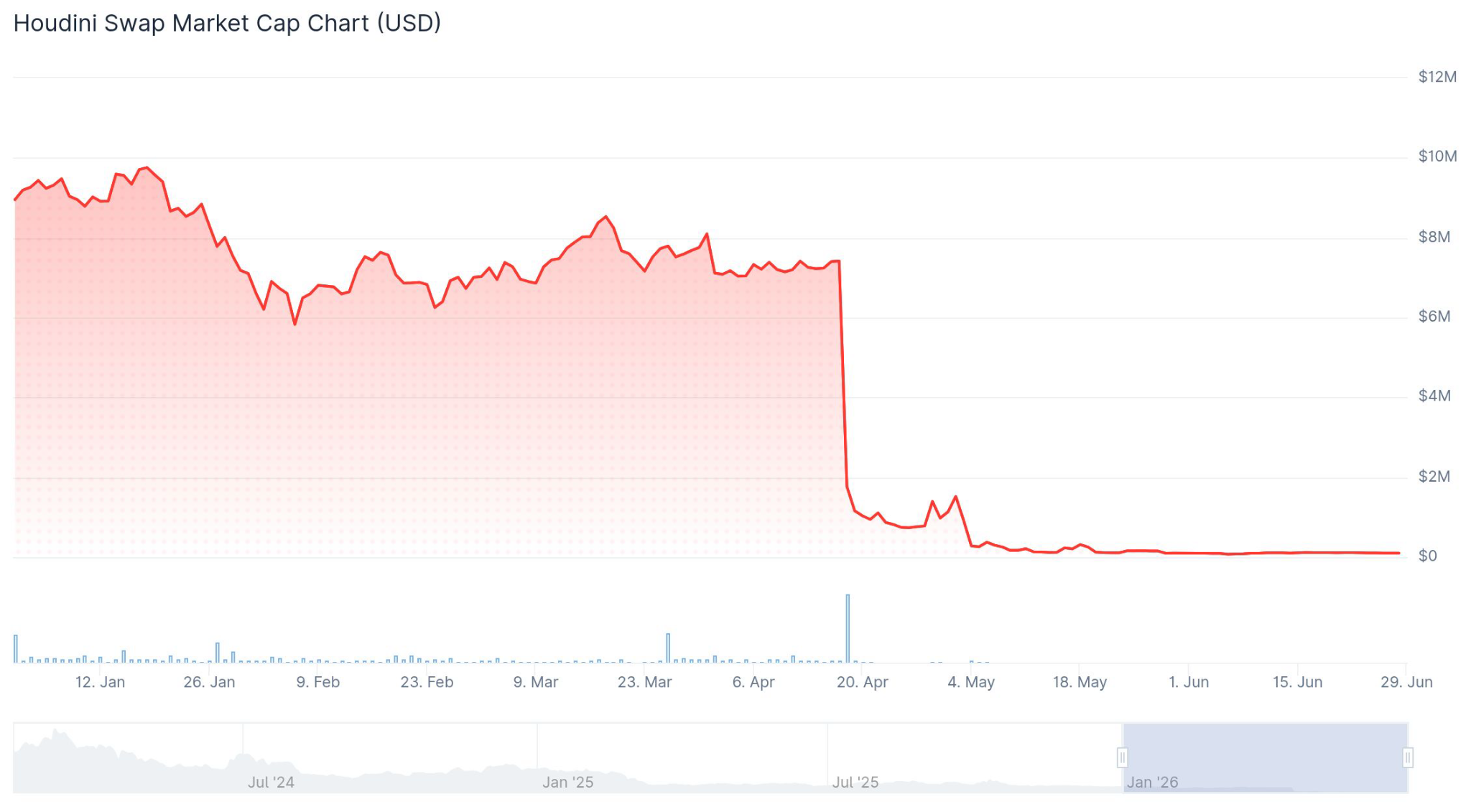
Source: coingecko.com/en/coins/houdini-swap
However, the market is not waiting for rigid legislation, and solutions to this legal deficit are already partially emerging. Examples include ownership tokens, where a portion of a company's equity is held by an SPV structure and subsequently tokenized, or platforms like MetaDAO, which move the entire equity of a project directly onto the blockchain. While these pioneering models point the way toward a more transparent and equitable future, they remain experimental exceptions for the vast majority of the current crypto market.
If you want to know where the former luster of cryptocurrencies has gone, you don't need to look only at token price charts. You just need to walk through Silicon Valley or open leading business magazines. The primary technological and investment narrative is no longer blockchain and decentralization. The king of today is artificial intelligence. This shift in attention is not just a matter of fleeting media hype; it is a massive reallocation of capital, which is uncompromisingly evidenced by hard data from the venture capital (VC) market.
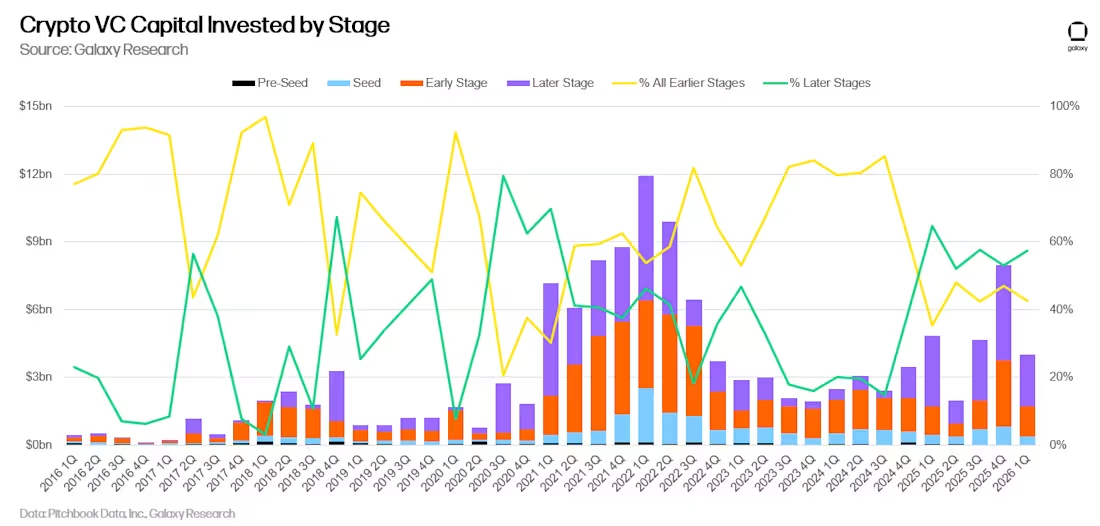
As shown by annual statistics from Galaxy Research (see the first two charts), the volume of VC investment in crypto projects is experiencing a drastic decline following the historic peak of 2021 and 2022. However, what is most alarming for the ecosystem is the drying up of financial pipelines in the earliest stages—namely pre-seed and seed stages. It is precisely in these incubation phases that future innovations are born. Without an influx of new venture capital, crypto has turned into a closed pond where only old liquidity is being recycled.
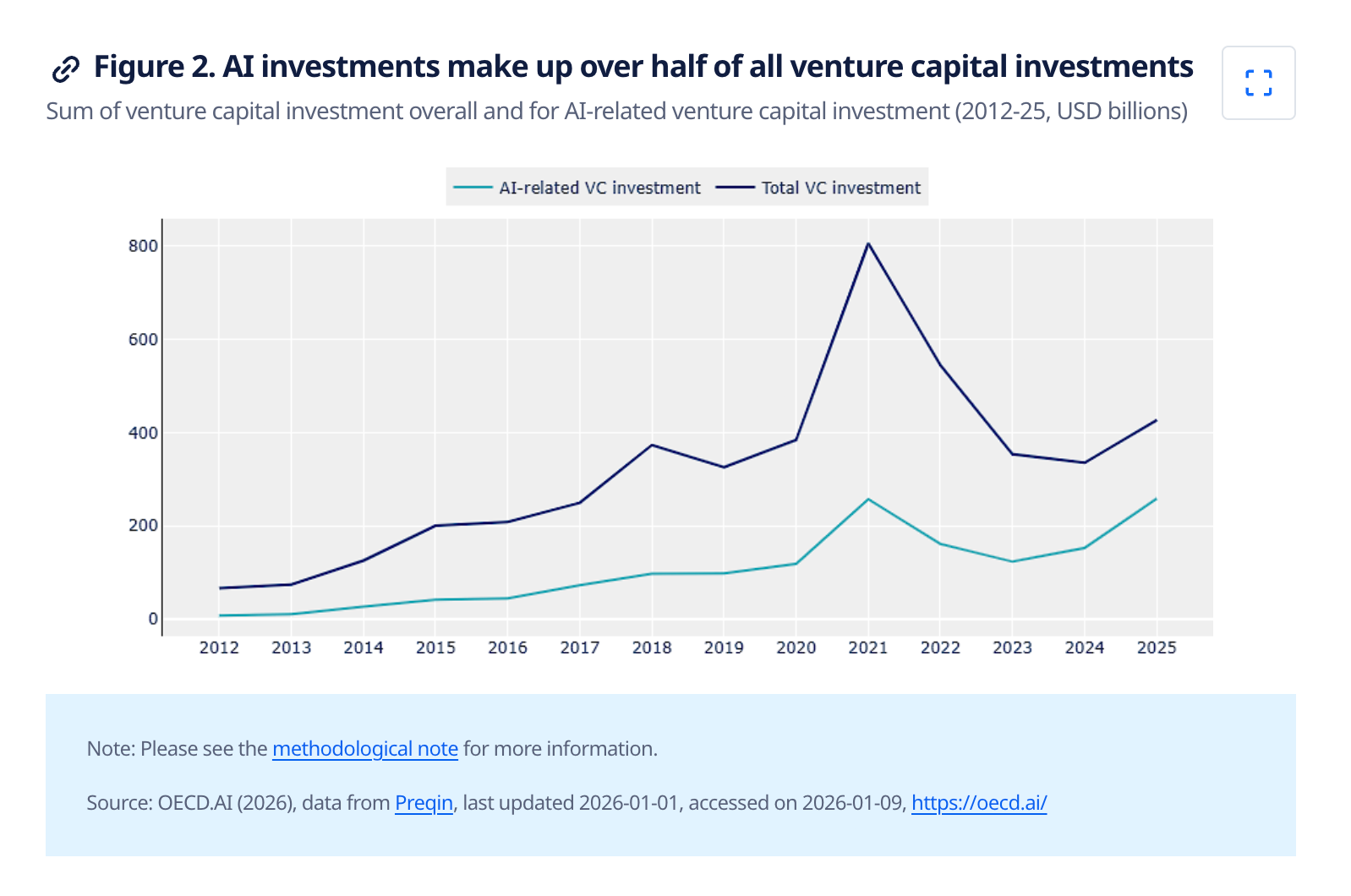
On the other side of the barricade stands artificial intelligence. According to global data from the OECD and Preqin, AI has experienced an unprecedented investment boom. While AI-related projects accounted for roughly 30% of the total value of global VC investments in 2022, by 2025, this share had skyrocketed to 61%. Nearly two-thirds of all venture capital in the world is now flowing into a single vertical, underscoring its absolute dominance in the global economy.
This brutal disparity has fully spilled over into public equity markets, where investors have found what they previously sought in vain in cryptocurrencies: paralyzing, even absurd price growth that defies traditional company valuation principles. In the AI segment, the stock market has begun generating returns that were once the exclusive domain of cryptocurrencies—and often only the riskiest ones, such as memecoins. Moreover, this trend is escalating in 2026 as a massive volume of capital flows—and will continue to flow in the coming months—into the historically anticipated mega-IPOs of AI leaders, led by SpaceX, Anthropic, and OpenAI. These multi-billion dollar public offerings are reliably draining global liquidity and opening the floodgates for a whole new wave of follow-on AI startups, which represent a much more attractive target for investors than digital tokens. Certainly, a significant portion of this growth is backed by real fundamentals, rising revenues, new orders from Nvidia, and technological progress, but the market may already be spilling over into the phase of a classic investment bubble. This is evidenced by the trajectories of companies like Marvell Technology, Micron, and Sandisk, whose valuations have shot into the stratosphere, as well as some restructured traditional firms like Intel.
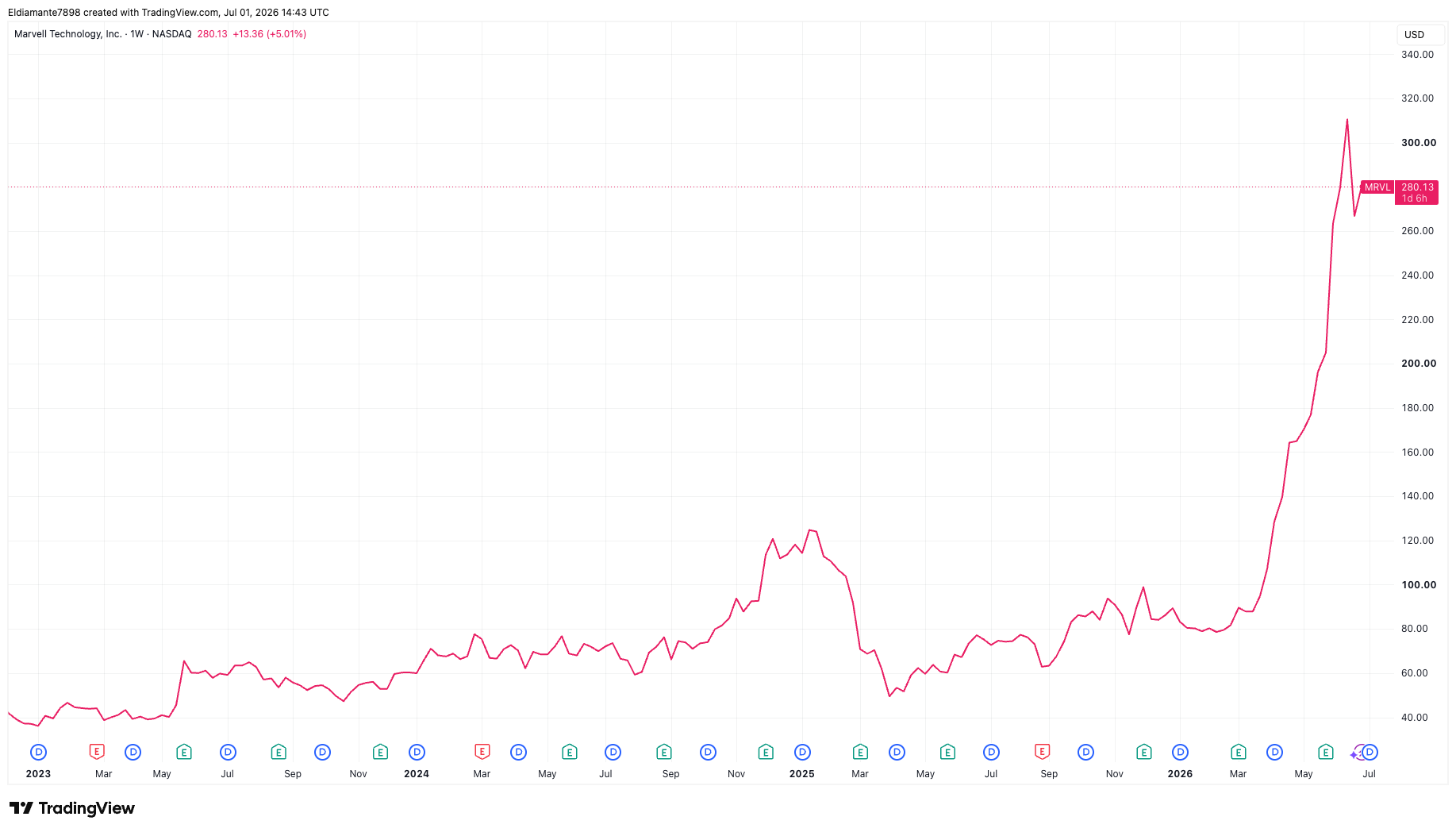
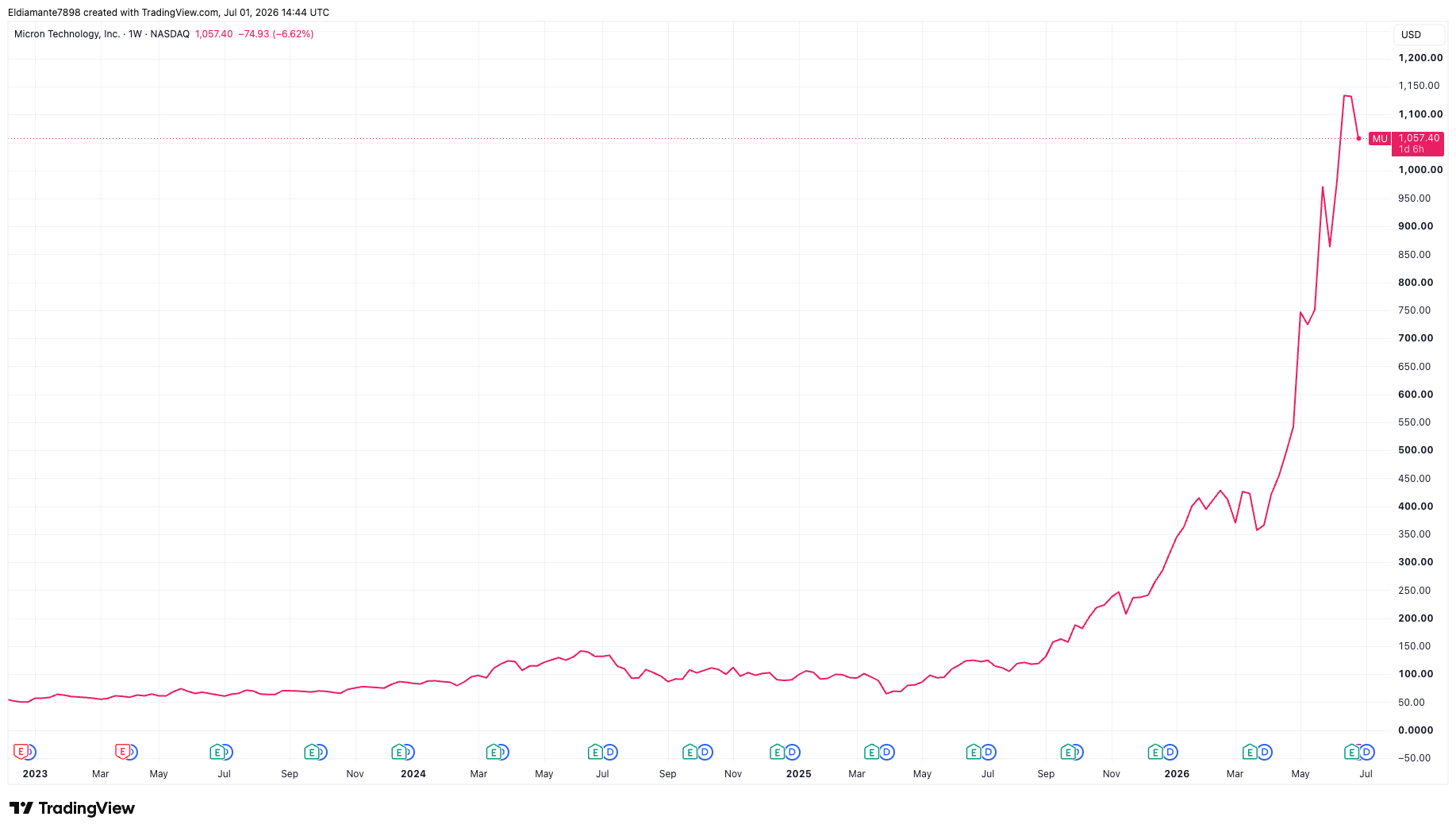
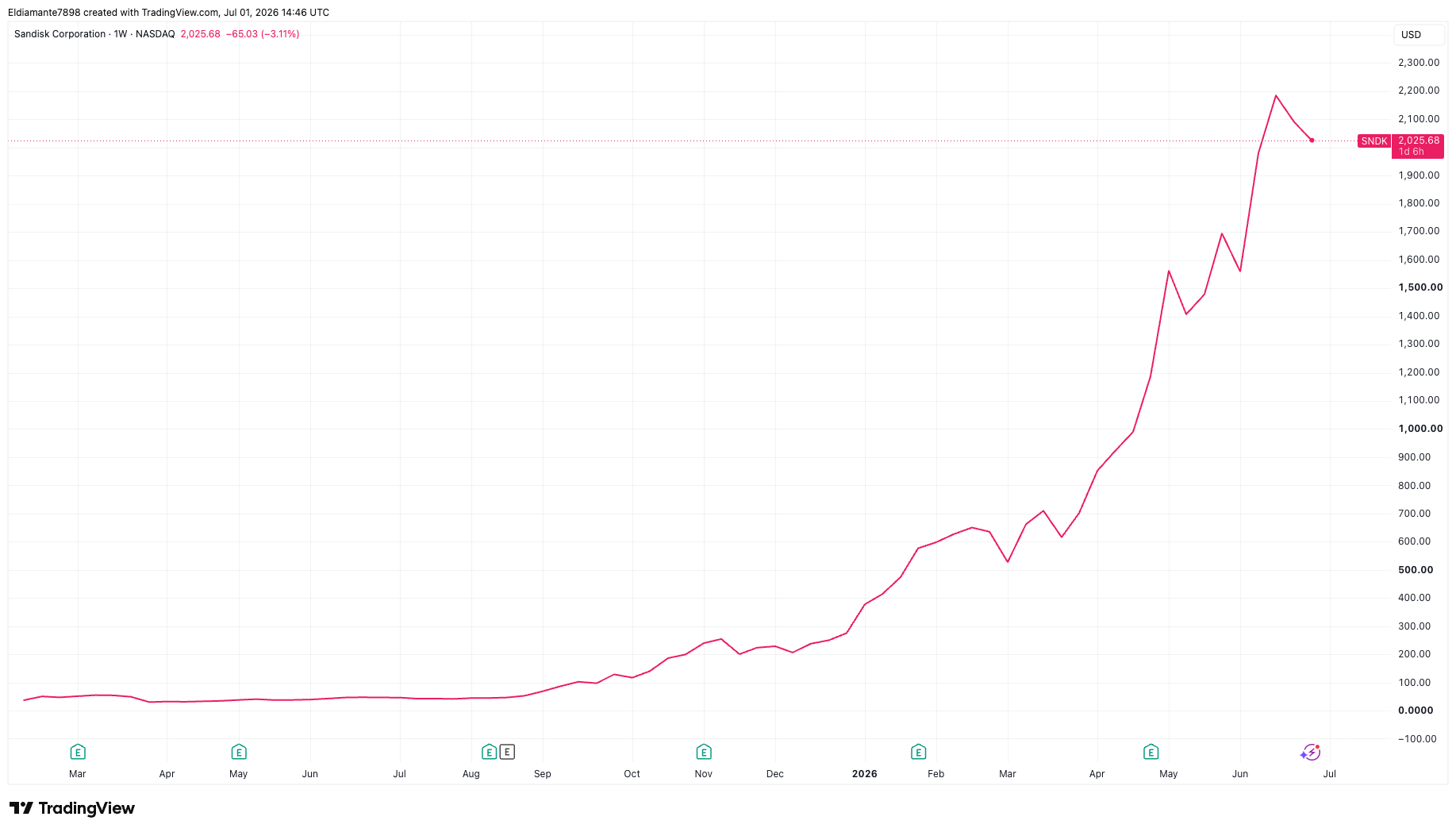
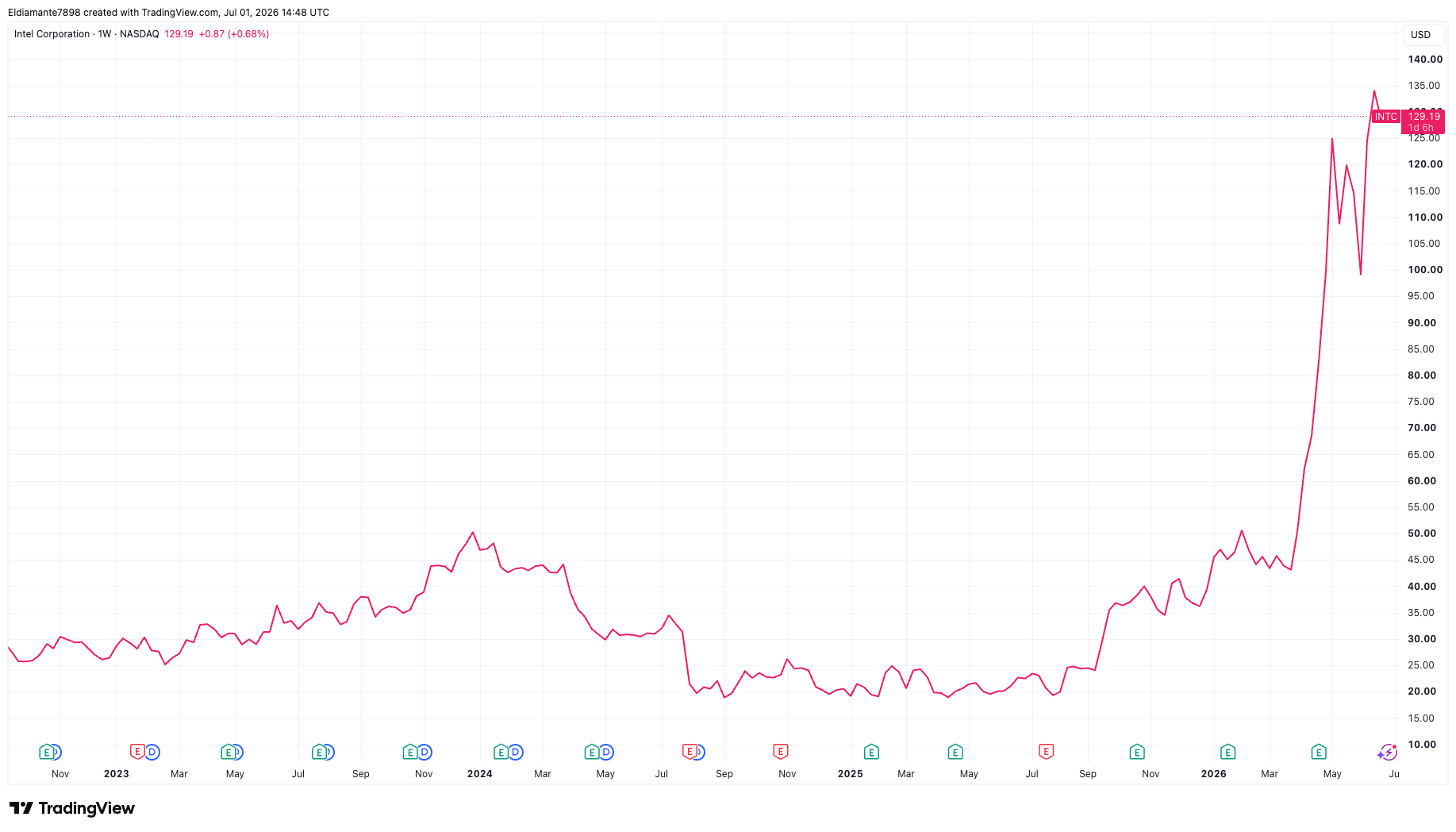
Source: TradingView
Why, then, would institutional or retail investors today take on enormous risk and struggle to buy legislatively unanchored tokens with zero intrinsic value, when the accessible, regulated, transparent, and liquid stock market offers them massive appreciation through the AI narrative? In short, crypto has lost its strongest magnet: the status of being the only place on earth where you can turn a thousand dollars into a million in a short amount of time.
From a technological standpoint, the cryptocurrency industry is nearly finished. The underlying infrastructure is complete, scalable, and robust. It is more or less clear that the winning ecosystems have become EVM-compatible networks, the high-throughput Solana, and perhaps a new generation of chains with extreme throughput, such as Sui. The highways are built; the problem is that there isn't much traffic on them. The cryptocurrency ecosystem is failing in organic adoption and the arrival of new, real retail users, so a wave of consumer applications and convergence with traditional finance must come. Data from the Token Terminal platform (see chart below) reveal this in part, but determining actual user numbers in crypto is very difficult, as anyone can have multiple addresses.
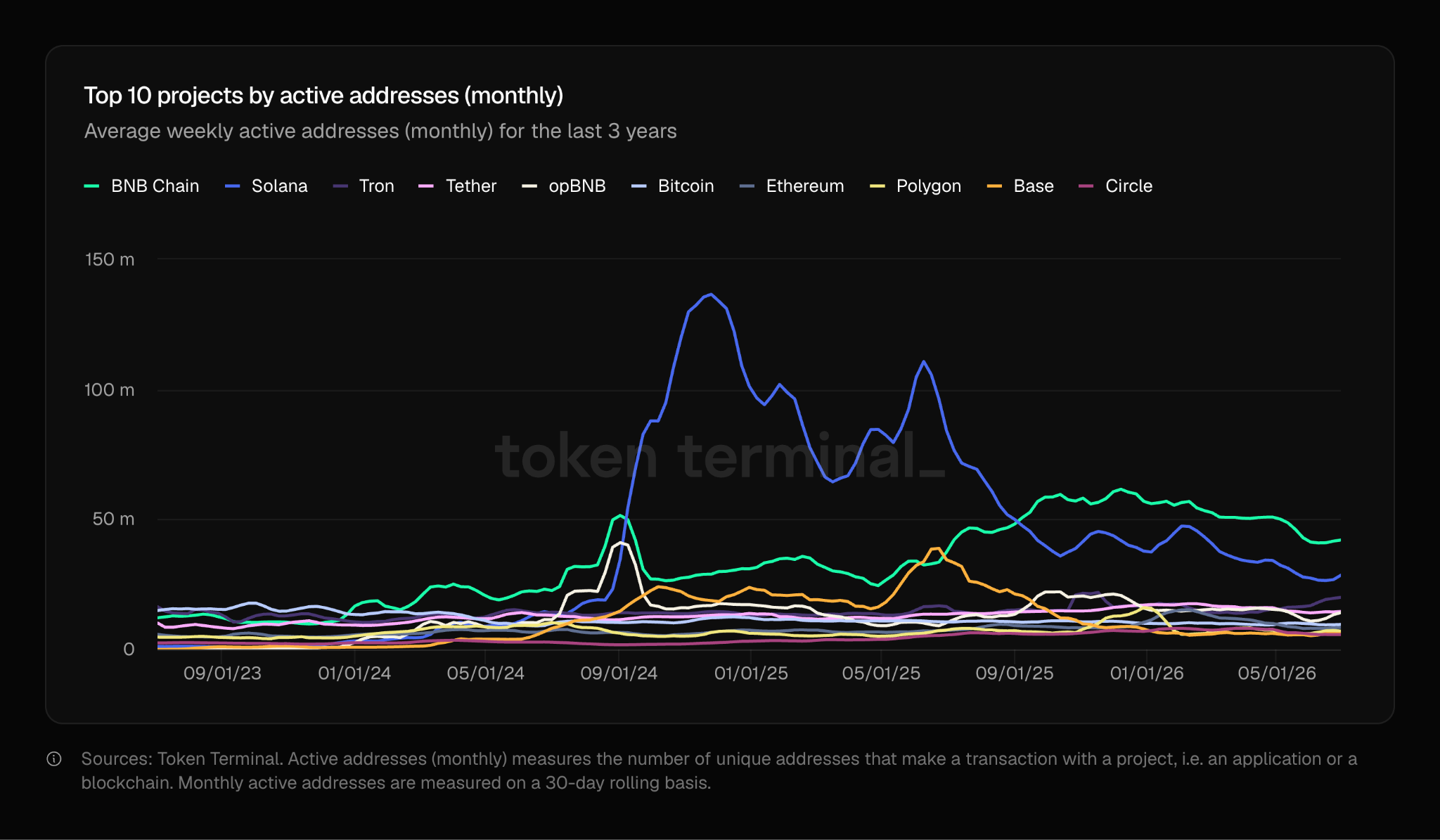
Source: https://tokenterminal.com/explorer/metrics/active-addresses-monthly
In previous years, this was partially masked by a massive wave of so-called airdrop/incentive farming. User activity wasn't driven by interest in the technology, but by pure opportunism—the prospect of free tokens for generating artificial volume. However, once projects distributed these incentives, they hit a harsh reality. It turns out that a poorly designed airdrop does more harm than good. It triggers massive selling pressure, alienates the genuine community, and leaves behind a toxic economy and charts helplessly falling toward zero; a good example of this is Berachain.
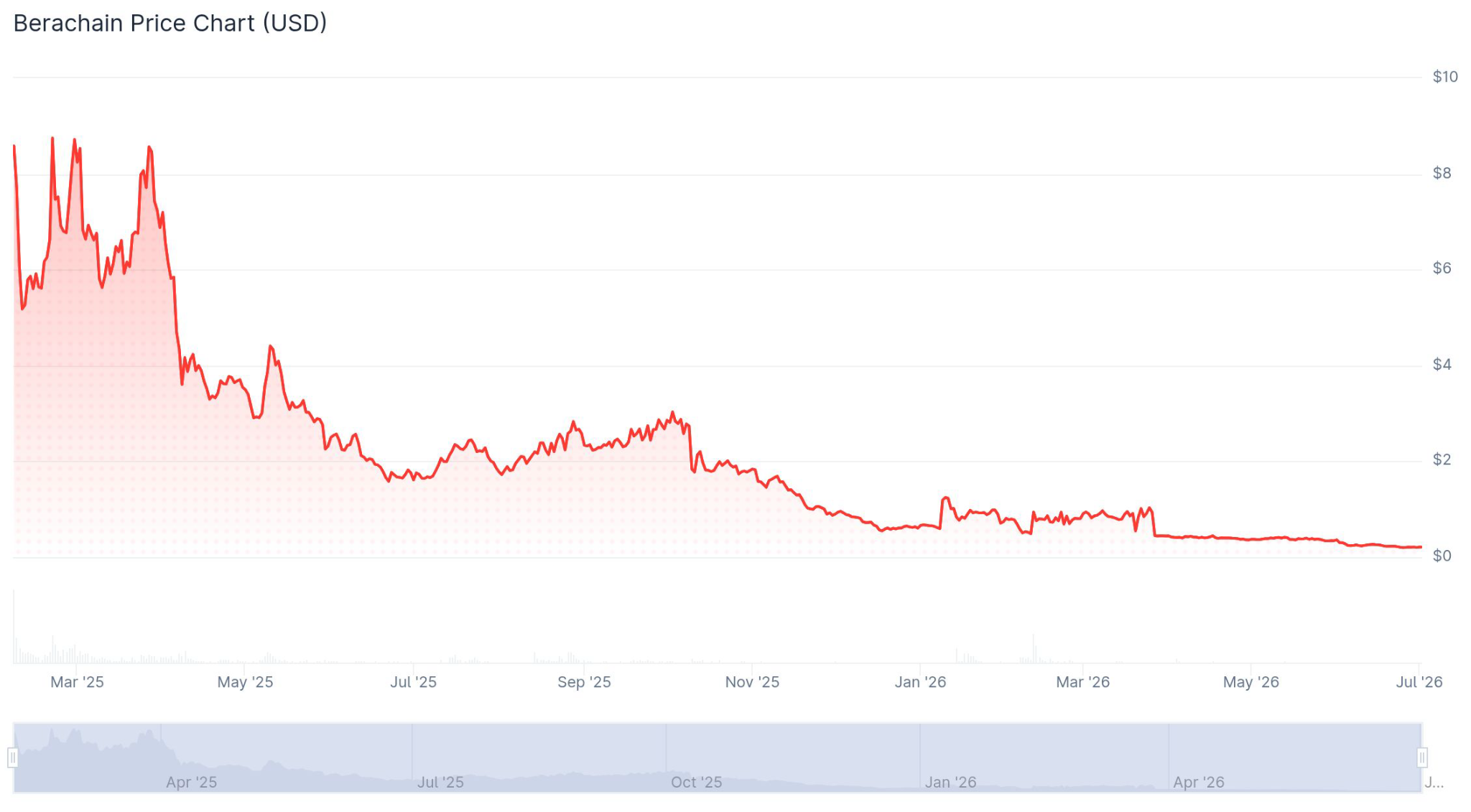
Source: https://www.coingecko.com/en/coins/berachain
Crypto has been missing airdrops like Hyperliquid in 2024, which managed to turn their early community into truly wealthy individuals who kept their capital in the ecosystem and continued to develop it. Instead, the market is currently spinning in circles, constantly fighting over the same users. There is a lack of new "breakthrough" applications that could onboard millions of users without them even realizing that a blockchain is running in the background. While the path may lead through integrations into established fintech apps and mass payments with stablecoins, there are fewer and fewer real innovations so far.
A bright exception that proves the rule is the aforementioned Hyperliquid. It managed to attract real users simply by offering a unique product that traditional finance cannot provide, and due to the geopolitical situation, there was high demand for it, namely trading oil 24/7.
The current lack of interest also stems from the fact that the cryptocurrency world is currently going through a period of narrative drought. When we look at the topics driving discussions today – RWA (real-world asset tokenization), stablecoins, prediction markets, or privacy – we find that crypto was already living with these in 2023. The industry has not brought any fundamental new concept or narrative in recent years.
The cryptocurrency sector has long strived to be perceived by the general public and conservative institutions as a legitimate and secure financial industry. However, certain structural phenomena and recent incidents are significantly slowing down this market maturation process.
One of these was the boom in memecoins. While they brought a new wave of retail users to the market in the short term, for a large portion of them, this experiment ended in financial disillusionment. Frequent cases of so-called rug pulls (sudden liquidity pulls by founders) and suspicions of insider trading—which is significantly easier in crypto due to blockchain pseudonymity than in strictly monitored stock markets—led many newcomers to leave the market, feeling that the entire ecosystem lacks basic fairness.
A more complex situation also arose on the political scene, where a strong boost for the industry's development was initially expected. The start of the Trump administration was accompanied by optimism that the era of aggressive lawsuits by the SEC would end and the market would gain clear rules of the game. Ultimately, however, it was Donald Trump himself and his family who, through their commercial approach to crypto, raised a number of questions regarding conflicts of interest and the credibility of the entire movement, through projects such as $TRUMP, $MELANIA, or World Liberty Financial (WLFI).
According to analyses by Reuters, the Trump family has earned at least $2.3 billion. President Trump himself disclosed income from crypto assets exceeding $1.4 billionin his 2025 financial disclosure. Of this, $635 million came from the sale of the $TRUMP memecoin and nearly $800 million from World Liberty Financial (including $520 million from direct sales of $WLFI tokens).
This blatant opportunism from the highest political levels played right into the hands of critics from traditional finance, who have long labeled crypto an environment controlled by a small group of elites.
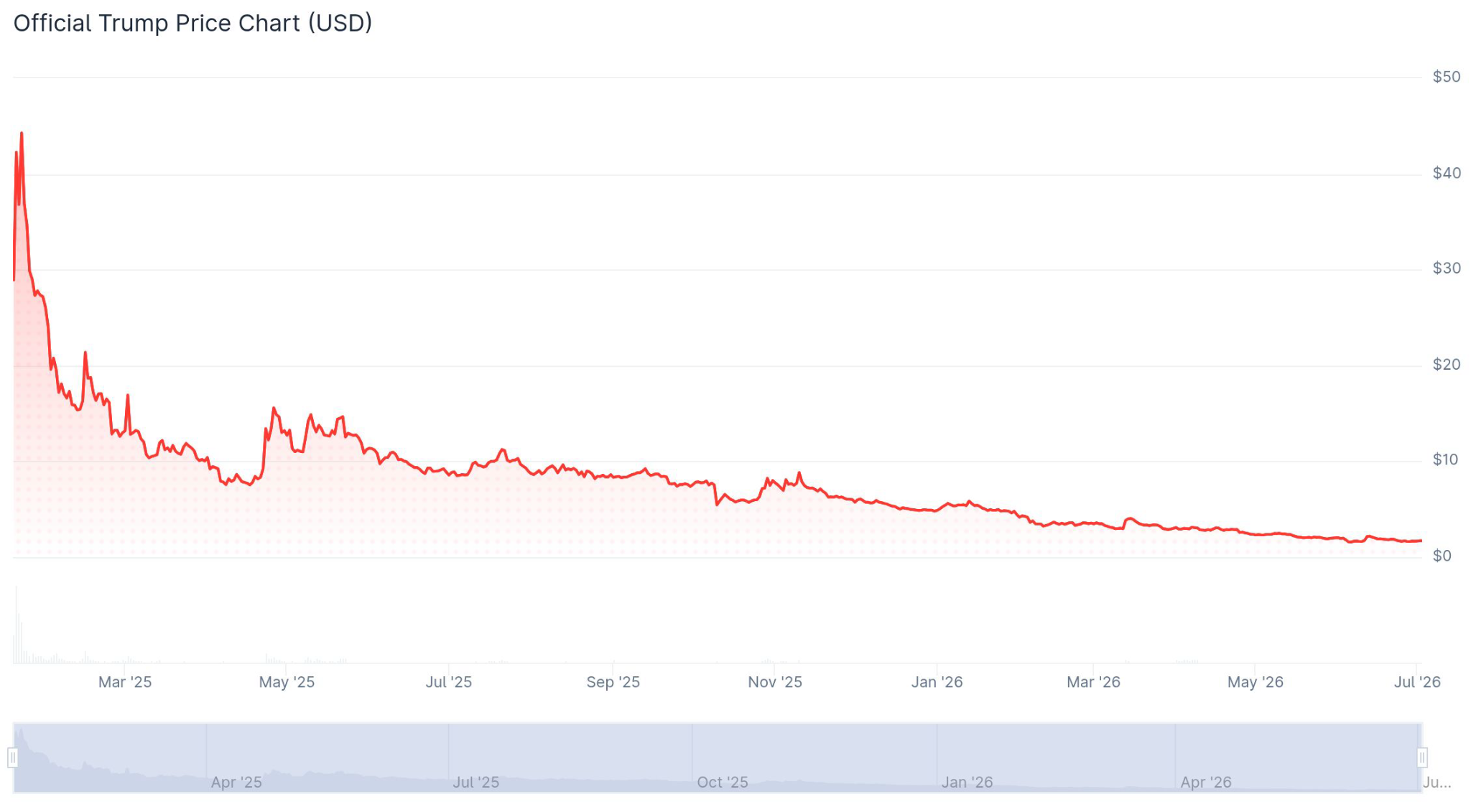
Source: https://www.coingecko.com/en/coins/official-trump
Just how fragile the internal market structure is and how large a role major centralized players play in it was fully revealed on October 10, 2025. Within a few short hours, over $19 billion in leveraged positionswere wiped from the market, Bitcoin plummeted from roughly $122,000 to $105,000, and the liquidations affected more than 1.6 million trading accounts.
While the macroeconomic trigger was the newly announced trade tariffs, a technical failure at the Binance exchange played a fatal role in the depth of the crash.The world's largest platform buckled under a massive surge in volatility, unable to handle the transaction load: its matching engine (matching engine) experienced significant latency, and the API interface for key market makers froze completely. Users lost the ability to efficiently top up collateral or close positions in time, triggering a mechanical, algorithm-driven liquidation cascade.
This event demonstrated that while the market is in much better shape than during the FTX collapse, crypto still suffers from a Single Point of Failuresyndrome. As long as the industry's entire liquidation mechanism remains dependent on a few centralized platforms that fail during critical moments, it will be difficult for institutional capital to accept crypto as a full-fledged alternative to traditional markets.
Although cryptocurrencies like to present themselves as an alternative financial system independent of central banker decisions, the reality of recent months has shown the exact opposite. The crypto economy remains tied to global liquidity, and the current radical shift in US Fed monetary policy represents a massive headwind. The market regime has fundamentally changed, and the era of easily accessible capital is definitively over.
At the beginning of the year, the bond market was pricing in two interest rate cuts (rate cuts). After the June FOMC meeting, however, the situation is completely the opposite – the market is now pricing in two rate hikes (rate hikes). This sudden 100-basis-point (1%) shift in expectations is a real drag on risk assets, more so than the Fed's famous dot plot itself. The yield on the 2-year US Treasury note (2-Year Treasury yield) started this year at 3.48%, but has since climbed to 4.21%. In practice, this one-percent jump means a complete repricing of all long-duration assets (long-duration), which, alongside tech startups, includes crypto in its purest speculative form.
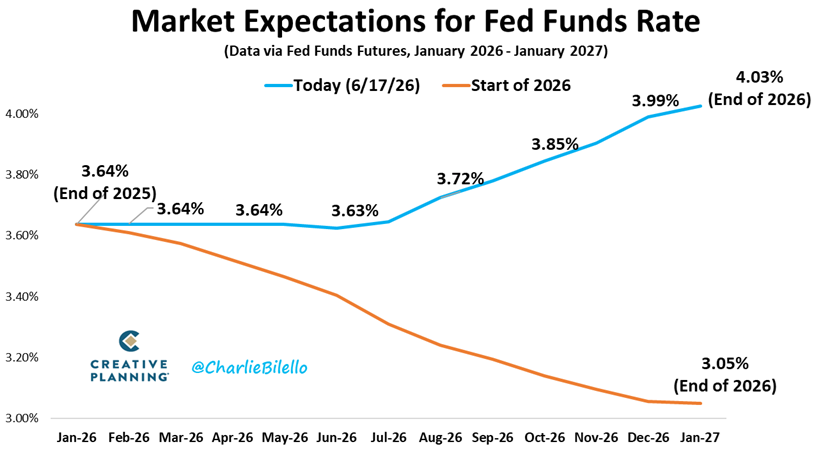
Source: https://x.com/charliebilello/status/2067343752478281929
This situation is further compounded by a tense geopolitical climate and persistent inflation concerns. Among economists and institutional investors, the view that interest rates will never return to the ultra-low levels seen in the decade before the COVID pandemic has become increasingly established. A period of higher and structurally more volatile inflation is becoming the new normal, which means permanent pressure for risk assets sensitive to the cost of capital.
A final layer of uncertainty was introduced to the market by a personnel change in the leadership of the US central bank. The new Fed Chair, Kevin Warsh, has decided to abandon the previous strategy of highly transparent market guidance (forward guidance). While the market was previously accustomed to detailed hints about what the Fed would do in the coming months—which provided stocks and crypto with a comfortable cushion of predictability—Warsh prefers a less readable, data-dependent approach. The absence of clear guidance increases the risk premium across all markets and reduces investors' willingness to speculate.
In the early stages of the cryptocurrency cycle, an ambitious whitepaper, a charismatic founder, or a mere promise that a team was building "foundational infrastructure" in a new blockchain ecosystem was often enough for investors. Venture capital flowed freely back then, regardless of whether a project showed any traction or if the real world had any interest in the product. However, following the global drying up of capital, a hard paradigm shift has recently occurred: the cryptocurrency market has uncompromisingly moved from the era of visions to the era of traction. Today's investors no longer pay for promises. They demand real users, sustainable metrics, and clear validation of the product by the market (Product-Market Fit). This pressure has triggered a massive and painful market cleanup. Projects that failed to deliver real added value and generate organic revenue are burning through their financial runway and quietly shutting down.
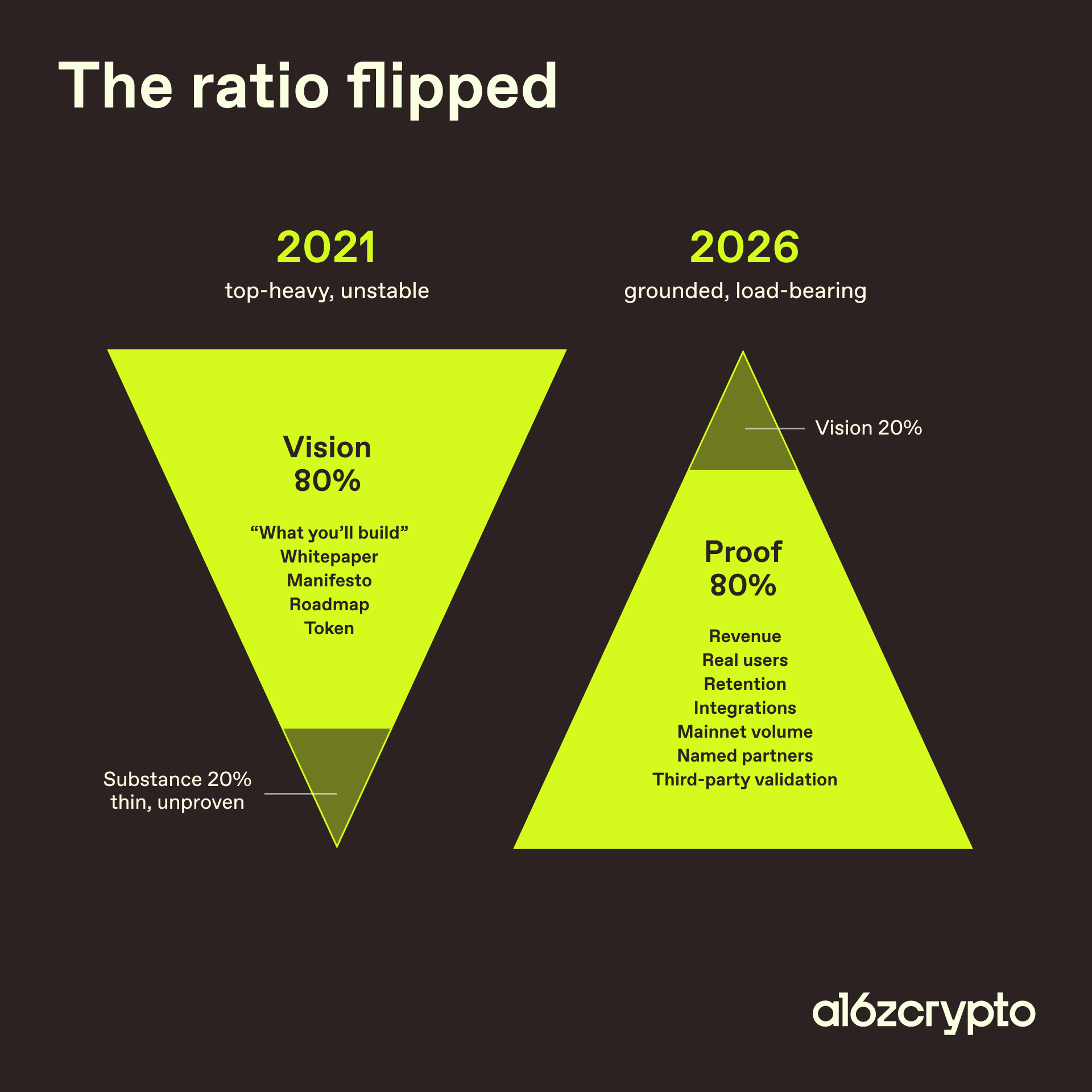
Source: https://x.com/a16zcrypto/status/2069090809530740834
This natural consolidation has recently been further intensified by a brutal wave of sophisticated DeFi hacks. It turns out that many founders have completely failed to manage the transition from small development teams to large corporate structures that manage billions in user assets (Total Value Locked – TVL). Protocols have failed catastrophically in the areas of risk management and governance.
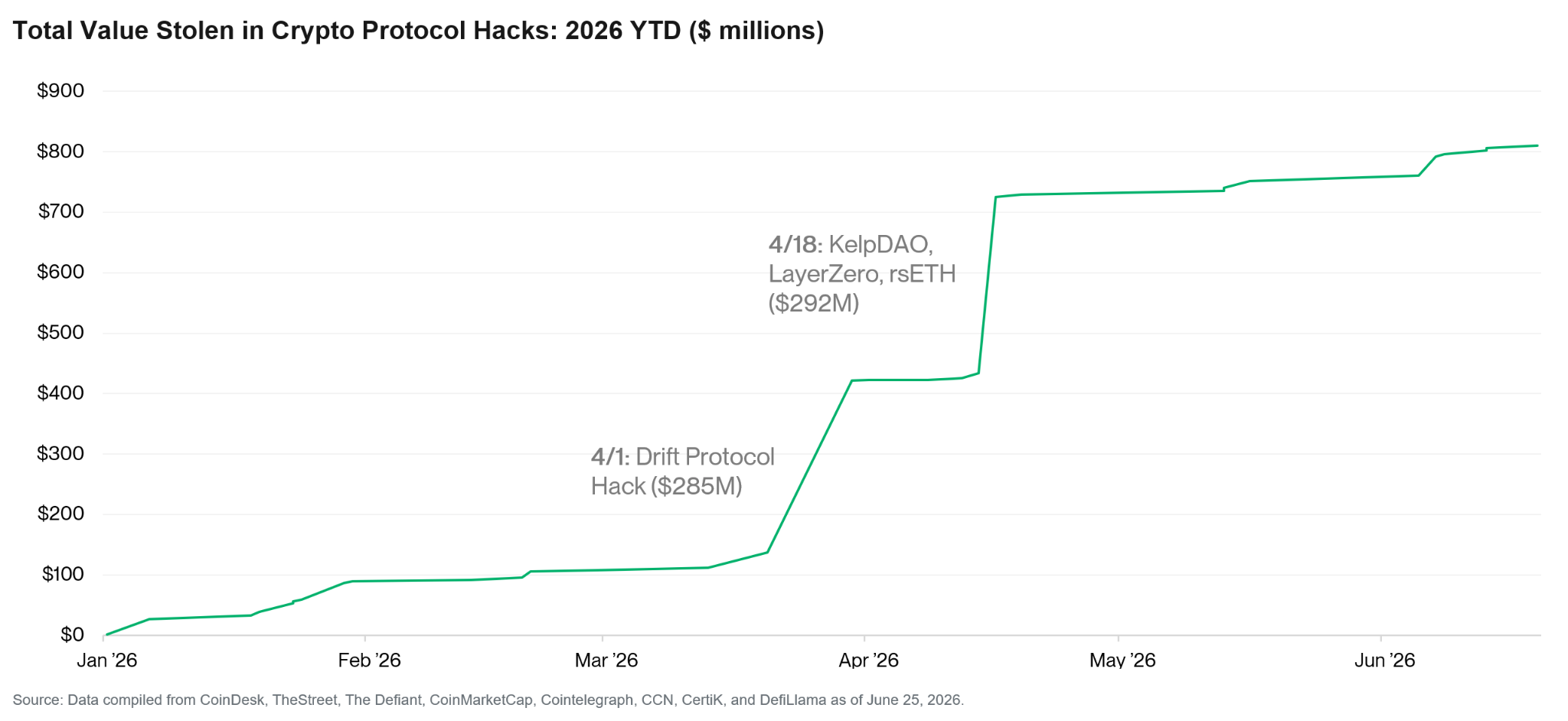
Recent major exploits of projects such as KelpDAO (whose rsETH crisis triggered a domino effect impacting even established giants like Aave), Drift Protocol or Step Finance have revealed a systematic underestimation of security standards. In the traditional financial world, a strict auditing and security process is the alpha and omega. Yet in crypto, implementing professional risk management, independent insurance mechanisms, and properly configured, institutionally managed multi-sig wallets would be enough to eliminate a large portion of this damage.
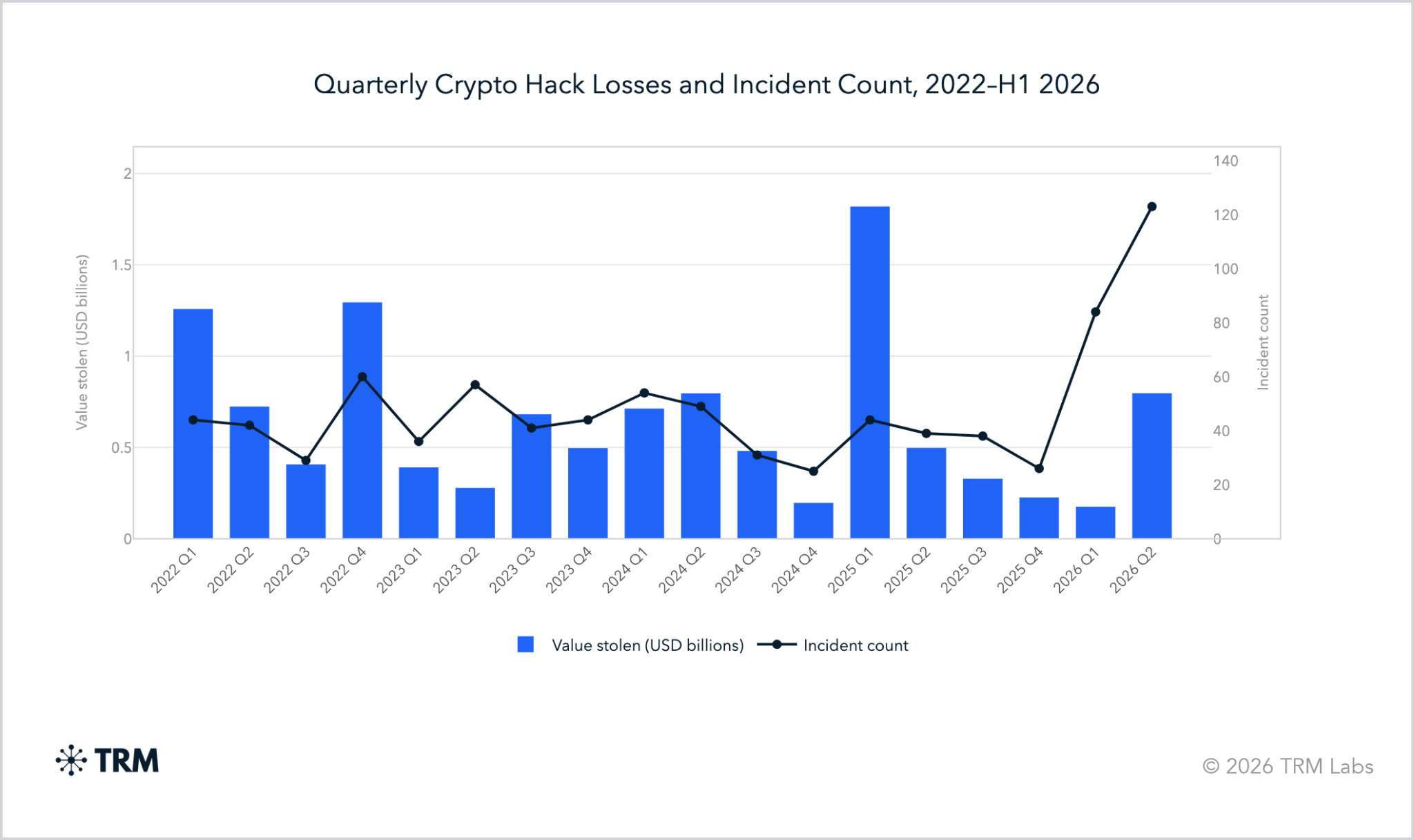
Furthermore, a new, highly efficient predator has entered the game: artificial intelligence. Attackers are now massively utilizing specialized AI models to scan smart contracts, capable of detecting even the slightest logical flaw in the code with unprecedented speed. This year's statistics speak for themselves:
This year, over 800 million dollarshave already been stolen from crypto protocols. Just the two largest attacks – on Drift and rsETH (KelpDAO) – accounted for nearly 600 million dollarsIn this sense, AI acts as an uncompromising digital evolutionary filter. It ruthlessly eliminates fragile and amateurishly managed projects, leaving behind only those that are technologically resilient.
This market transformation is also linked to the latest major diagnosis of the current decline: the complete absence of corporate transparency and professional Investor Relations (IR). Many crypto teams still live under the dangerous illusion that launching a token (Token Generation Event – TGE) is their final exit and the end of the road. In traditional finance, however, listing on an exchange is merely the beginning of a journey that carries immense responsibility toward shareholders.
In crypto today, a tiny fraction of projects issue regular financial reports, performance summaries, or undergo independent audits. A bright exception are initiatives by platforms like Blockworks, which are striving to establish standardized data analytics and reporting for token projects so that investors can perform fundamental analysis based on real data rather than marketing impressions. Likewise, the market lacks dedicated IR specialists who could professionally communicate a token and "sell" its value to liquid funds or cautious institutions. Without adopting this basic institutional hygiene, crypto simply cannot mature.
While the first waves of cryptocurrency cycles were driven purely by retail enthusiasm, the past period was expected by all accounts to be defined by a massive influx of institutions. After Donald Trump's election, the market was dominated by the narrative that the arrival of major global players would definitively erase volatility and send the prices of all digital assets to new highs. However, the reality of 2026 revealed a profound misunderstanding of how institutional capital actually works. Big players didn't come to save crypto—they came for the fees, the technology, and the users.
It turned out that despite friendlier political rhetoric, there is still a lack of a sufficiently robust and predictable legislative framework that would allow large funds to fully and directly enter the on-chain economy. Instead of becoming active market participants and buying tokens, banks and asset managers have taken on the role of service and distribution providers.
While they are launching spot ETFs and tokenizing their own traditional products (such as money market funds, bonds, or stablecoins) with great marketing success, they are effectively not interacting with the native crypto ecosystem at all. This situation has hit retail investors hard, as they naively expected in their euphoria that institutions would serve as "exit liquidity" to buy their speculative altcoins—and often shitcoins—at high prices on the open market.
For Wall Street, at this moment, there is only Bitcoin, and for the more adventurous, as a supplementary technological bet, Ethereum or Solana. From the perspective of regulatory compliance (compliance) and the risk management standards of major banks, the rest of the cryptocurrency market is virtually invisible. While some institutional interest can be observed in specific enterprise projects and institutional blockchains, such as Canton Network or R3 Corda, where multinational financial institutions act as network validators, these remain isolated laboratory tests within regulated boundaries. Furthermore, bank participation in these projects is often subsidized—founding foundations provide them with tokens or access for free as part of partnerships, simply to boast about big names in press releases. The idea that investment committees at traditional banks would purchase native project tokens directly on exchanges remains a mere utopia in the current legal environment.
Let us not view the current sobering of the cryptocurrency market as its definitive failure, but rather as a necessary phase of maturation. Every groundbreaking technology in history has had to go through a "Wild West" period and a subsequent harsh catharsis before it could truly transform the world. Today, under the pressure of macroeconomic reality and regulation, crypto is simply leaving the era of empty marketing promises behind and transforming into a legitimate, technologically robust sector. The departure of speculative capital and the forced end of fragile projects are clearing the way for those building on real security, transparency, and tangible utility for the end user.
The foundational highways in the form of scalable infrastructure are built, and for the first time in history, the industry has a chance to prove its true value without unrealistic price hype. In short, crypto is not dying; it is growing up—and it will emerge from this evolutionary crossroads perhaps smaller, but orders of magnitude stronger, more transparent, and better prepared for the real financial world.
Today, we have laid bare the biggest pain points and systemic flaws currently dragging the market down, but that is only half the story. In the next article, we will look at the other side of the coin. We will analyze what is actually working great in crypto, which technological trends are seeing massive success, and why it makes sense to continue following this transforming segment very closely.
Source: Expert article in collaboration with the Token Ventures Research team
Token Ventures
Token Ventures is a company that employs a hybrid investment strategy in the Web3 space. We support projects both through venture capital in early stages and through liquid investments in secondary markets. Beyond providing capital, we are active participants in the ecosystem: thanks to our deep expertise in DeFi, we actively manage our own assets through diverse on-chain strategies and provide hands-on consulting to help our projects and partners succeed. We also regularly publish our own market analyses and expert articles.