
.png)
While in my previous reflection, “Crypto at the Crossroads of Reality”, I subjected the entire market to an uncompromising review and separated dead ends from unsustainable narratives, today it is time to look at the other side of the coin and show what has actually stood the test of time. If we strip away price volatility, we see an ecosystem that has finally found its product-market fit and is solving real problems. In the following lines, we will therefore break down the most robust fundamentals of contemporary crypto upon which a new financial and technological infrastructure is being built: from the blockchain itself as an irreplaceable layer of digital trust, through the quiet revolution in global payments driven by massive stablecoin adoption, to the inevitable bridging with the physical world through the tokenization of real-world assets (RWA), decentralized physical infrastructure networks (DePIN), and prediction markets.
While in previous cycles the market was preoccupied with the fundamental question of whether blockchain as a technology would even survive and find real-world application outside a narrow group of enthusiasts, today there is no doubt about its technological triumph. The phase of defending its very existence is firmly behind us. The focus of the debate has shifted from the question of “whether it will work” to the purely pragmatic “how quickly can we deploy it and what will it bring us”.
Clear evidence of this shift is the massive interest from traditional financial institutions and large retail platforms. We see this, for example, in the moves of giants like Robinhood, which has decided to jump on this bandwagon by launching its own blockchain solutions.
As the thesis from a16z crypto very accurately defines: traditional finance doesn't actually want DeFi that much; they want the blockchain itself. Large players are adopting this technology and will use it massively for purely business reasons. They are integrating blockchain the moment it demonstrably brings them two key advantages:
Today, blockchain is not positioning itself as a disruptor that will destroy the old world, but as a new, highly efficient infrastructure layer upon which this old world will inevitably be forced to operate if it wants to remain competitive.
If we are looking for an absolute and undeniable product-market fit in the cryptocurrency ecosystem today, one that has long since transcended the community of speculators, it is undoubtedly stablecoins. What was originally a niche tool serving traders as a temporary safe haven from volatility has become the new backbone infrastructure for global payments. The approval of clear legislative frameworks (MiCA and the GENIUS Act) in key jurisdictions has removed legal uncertainty from the industry and opened the floodgates to institutional capital. From an analytical perspective, stablecoins represent a fundamental breakthrough in capital efficiency: they replace the outdated multi-tier correspondent banking system—burdened by long settlement cycles (T+2), high margins, and liquidity tied up in Nostro/Vostro accounts—with irreversible real-time settlement (T+0) at near-zero marginal costs.
A decisive, verifiable shift is coming from the biggest players in traditional financial infrastructure. Payment giants Visa and Mastercard no longer view blockchain as a threat, but are instead adopting it as their internal settlement rails:
However, institutional adoption is not limited to isolated projects by individual companies. The market is moving toward unified open standards. The emergence of the Open Standard initiative and its Open USD (OUSD) concept—which Visa, Mastercard, Stripe, Fireblocks, BlackRock, and more than 140 other leading financial institutions are collaborating on—represents a historic milestone. The goal of this alliance is to create an interoperable, 24/7 available standard for a programmable digital dollar. This approach eliminates the risk of fragmented liquidity locked on a single chain and provides corporate treasuries, PSP providers, and banks with a transparent and highly secure infrastructure for global interbank clearing and cross-border payments.
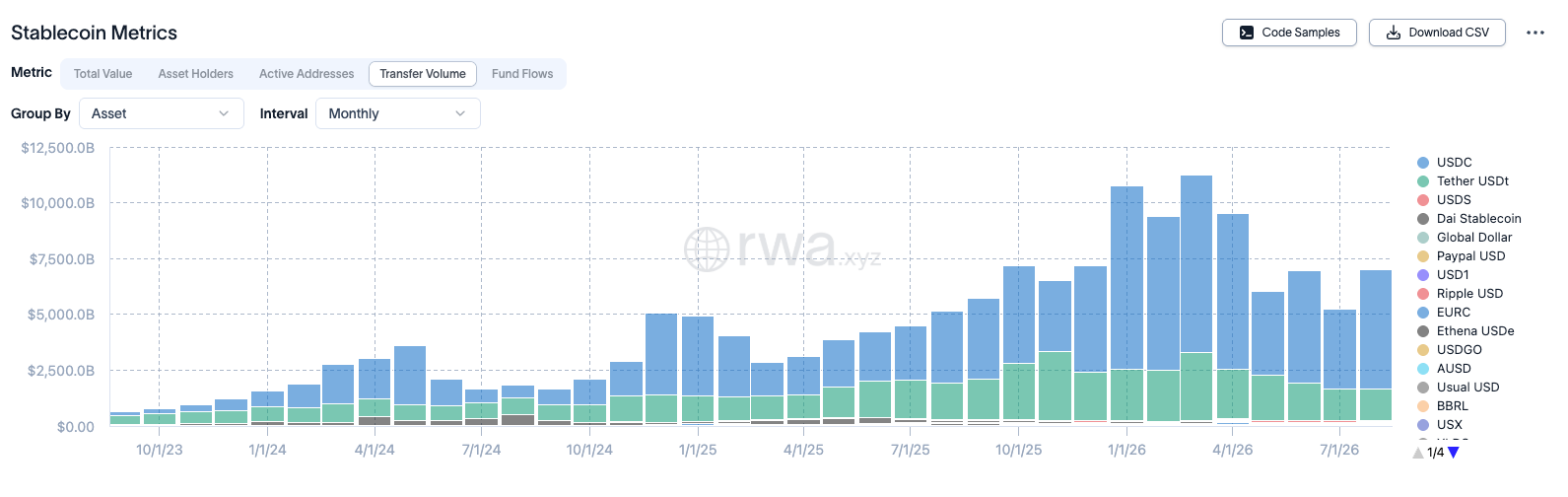
This infrastructure development has a direct and measurable impact. As shown by the monthly transfer volume metrics on the rwa.xyz platform, the total settled volume of stablecoins is reaching tens of trillions of dollars—with record peaks exceeding $11 trillion per month in the first half of 2026. The market continues to be steadfastly dominated by issuers Circle (USDC) and Tether (USDt)
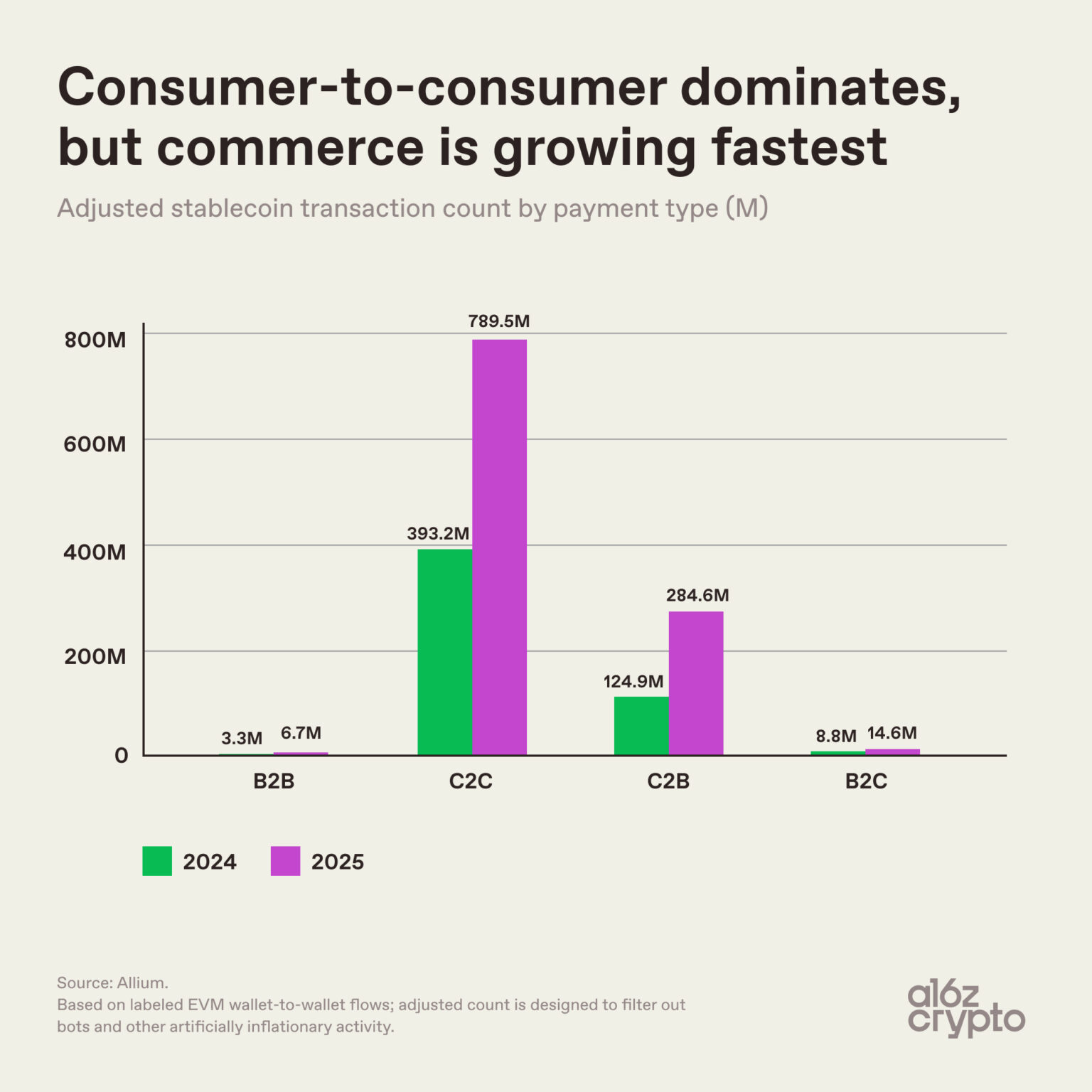
Even more telling is the detailed structure of transaction flows. Data from a16z crypto and Allium show that while peer-to-peer (C2C) transfers make up the bulk of the volume, the fastest-growing segment is consumer-to-business (C2B), where the number of processed transactions grew year-on-year from 124.9 million to nearly 285 million (an increase of over 128%). For merchants (merchants), stablecoins offer clear economic advantages:
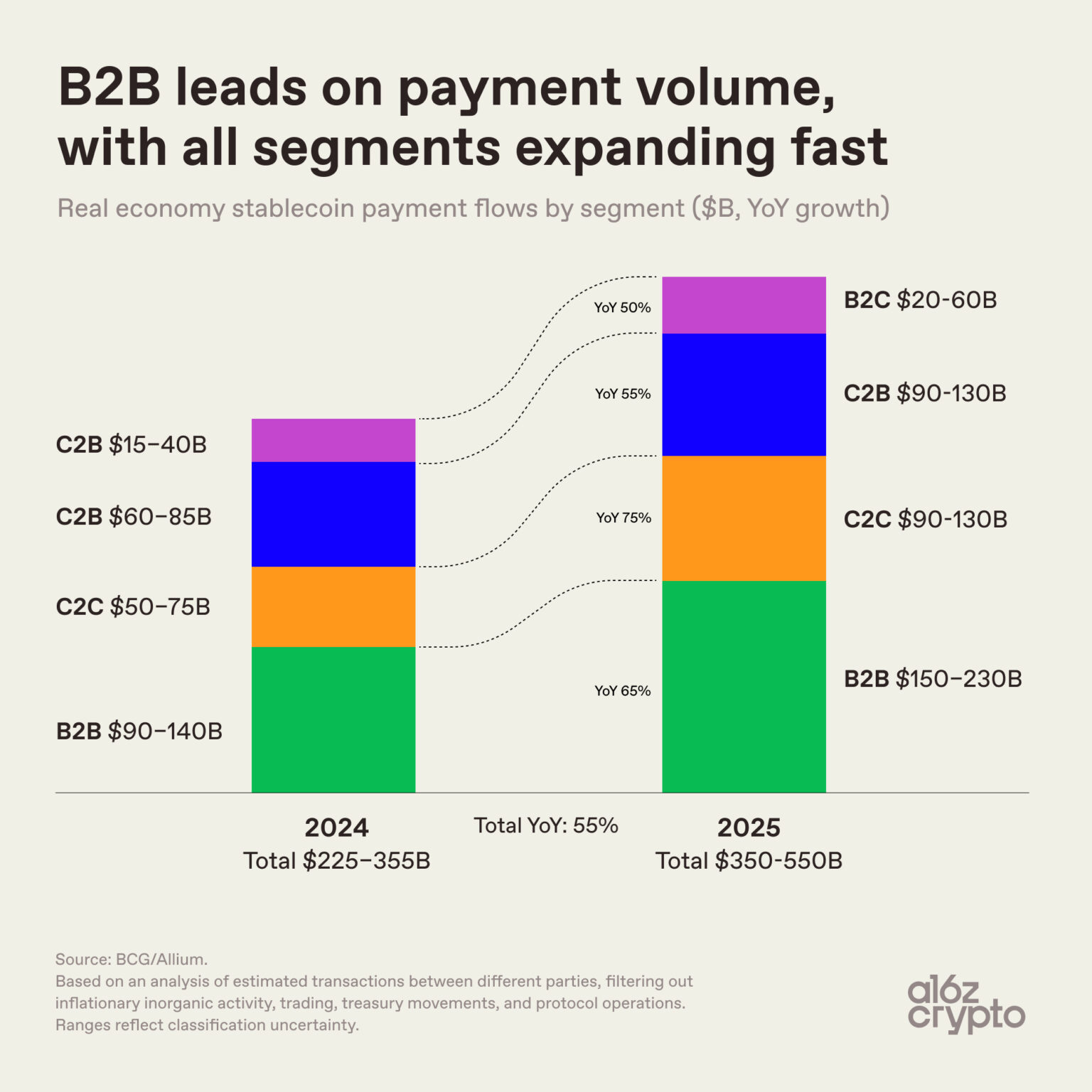
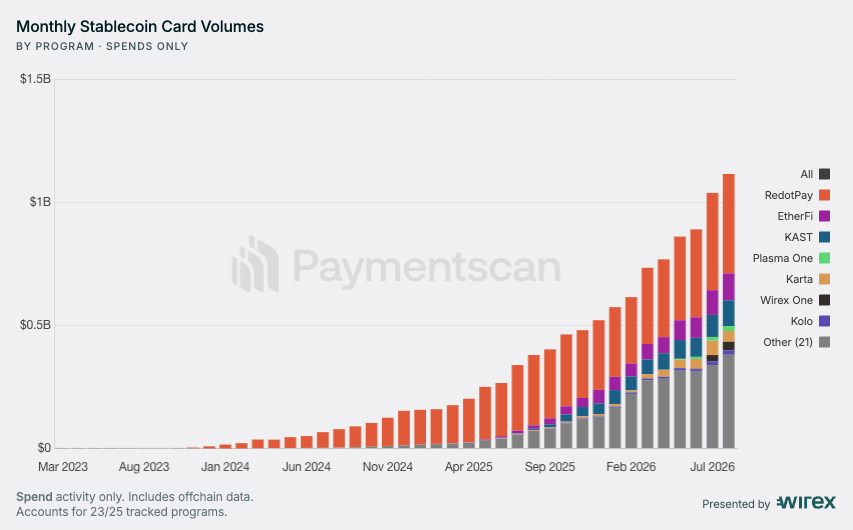
This boom in both commercial and retail use is directly linked to the technological maturity of payment applications and the underlying blockchain infrastructure. Data from the Payments-scan platform, which monitors monthly spending volumes on stablecoin cards by individual programs, shows a literal parabolic increase – while volumes were in the tens of millions at the beginning of 2024, by mid-2026, spending had surpassed the $1.1 billion per monthmark. Behind this mass retail adoption are low-cost Layer 2 networks (such as Base, Arbitrum, or Optimism) and high-throughput Layer 1 architectures led by Solana, which have pushed transaction fees below one cent and enabled seamless payments in regular stores directly from a stablecoin balance.
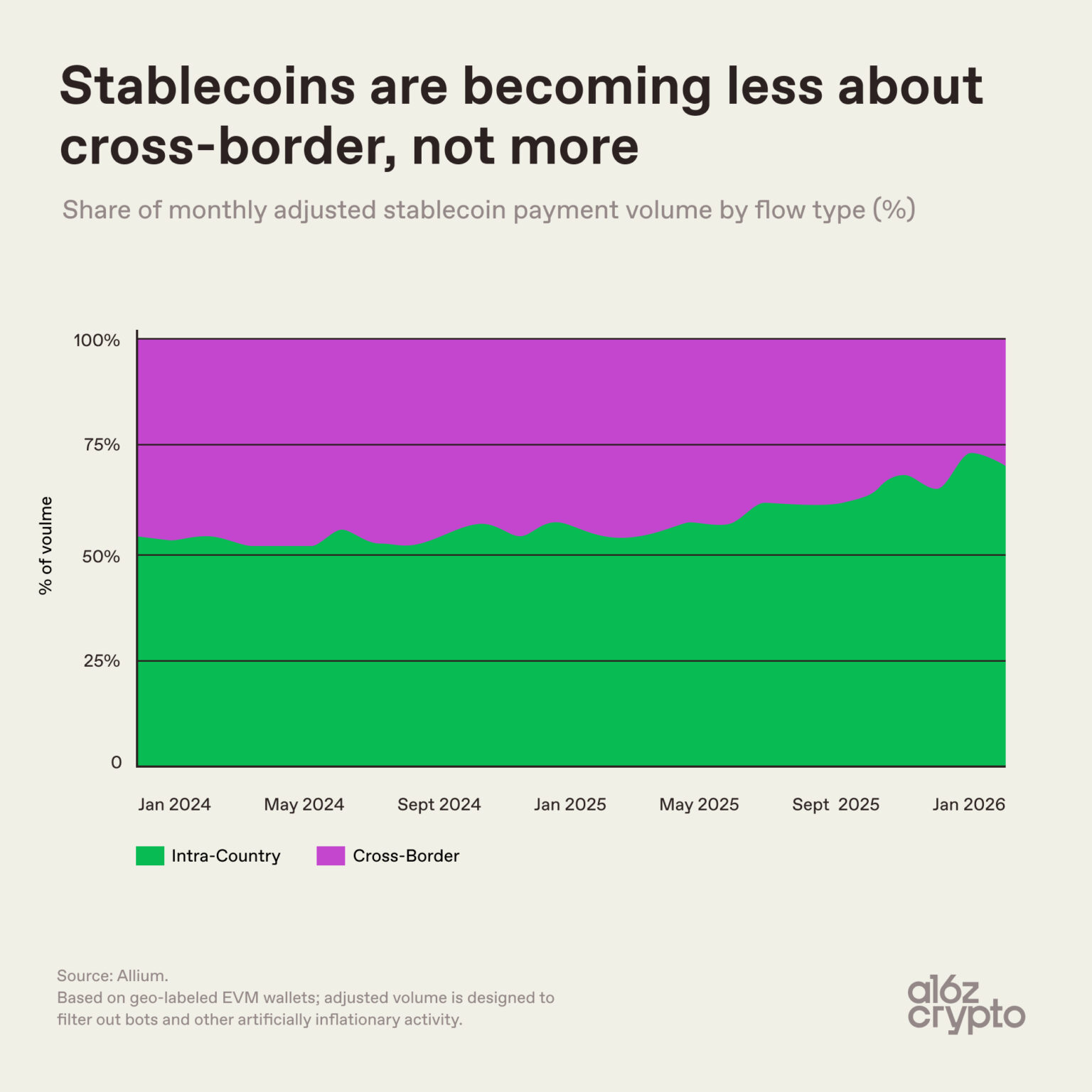
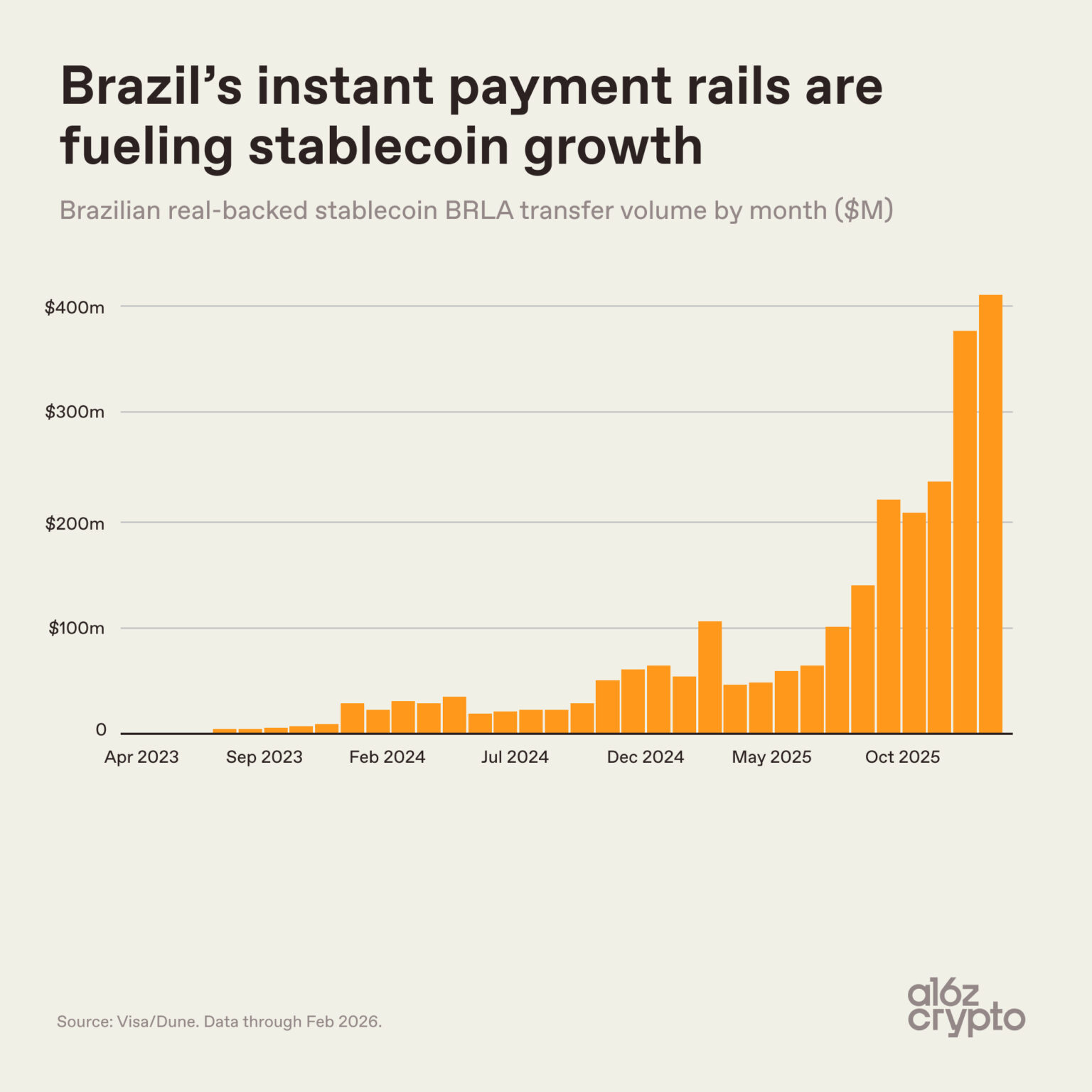
Although stablecoins were historically viewed primarily as a cross-border tool for international transfers, the latest analytical data show a surprising structural shift: the share of local (domestic) transactions within a single country has grown from roughly half of the total volume at the beginning of 2024 to nearly three-quarters in 2026. Stablecoins are thus becoming a localized payment medium. A prime example is Latin America, where, for instance, the Brazilian real-backed stablecoin (BRLA) is reaching monthly volumes of over $400 million thanks to direct integration with Brazil's instant payment system, PIX.
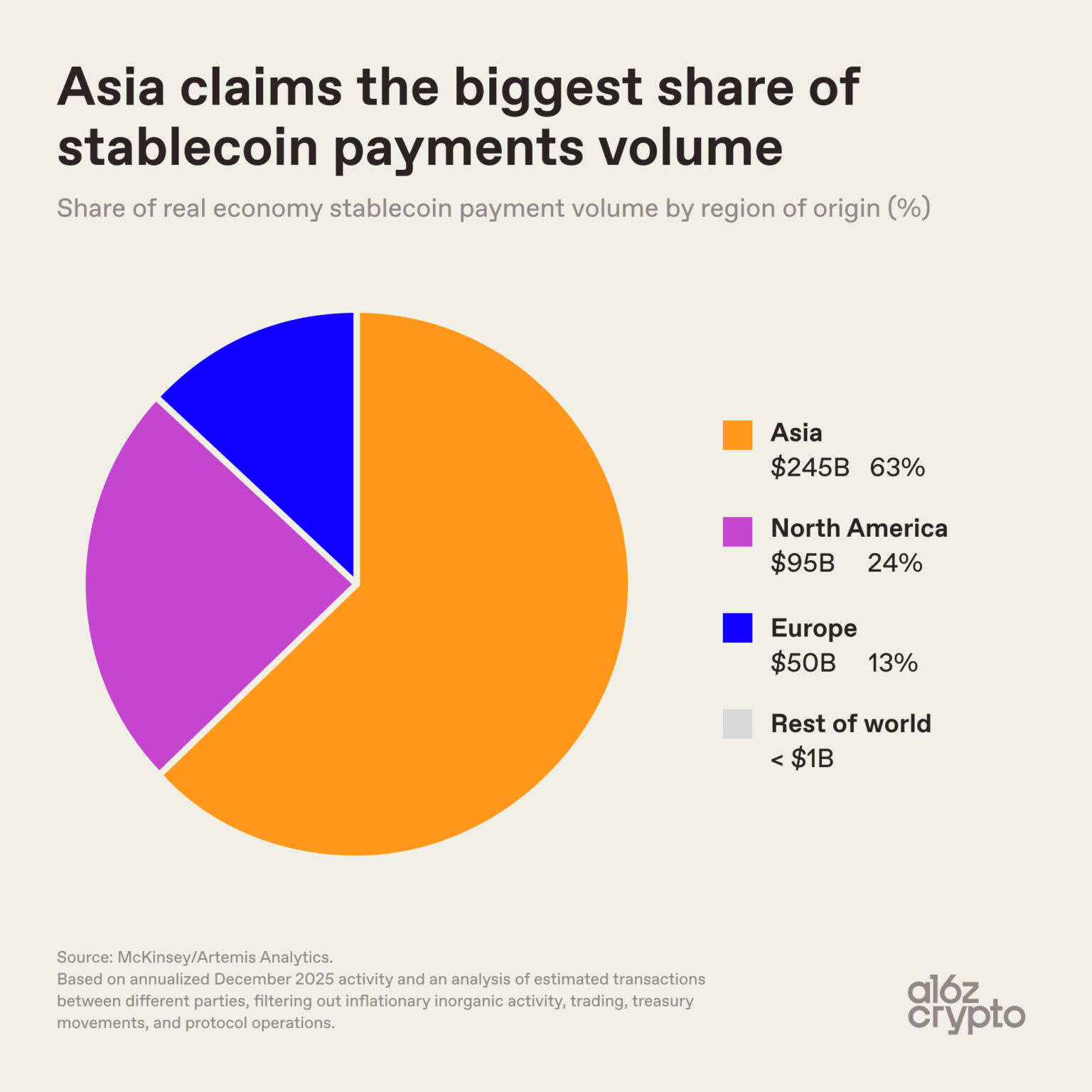
It is precisely in emerging markets (Latin America, Southeast Asia, Africa) that a phenomenon we call "hyper-dollarization"is occurring. In regions with high inflation, depreciating local currencies, or dysfunctional and restrictive banking sectors, stablecoins are not a speculation, but an existential necessity. Here, people and businesses use dollar-pegged stablecoins not only for trading but also as a store of purchasing power and a tool for daily economic survival. Blockchain infrastructure puts a global, secure financial account into their hands without the need to ask for permission from ossified local banking institutions.
Riding this wave is a new generation of crypto-neobanks and super-apps. These entities build their services entirely on on-chain infrastructure andself-custodial wallets. For these neobanks, a key strategic rule applies: payments and free stablecoin transfers are the acquisition channel used to establish a primary relationship with the customer. Once a user opens an account via the payment layer, the crypto-neobank offers them a comprehensive financial "stack" directly in the app—from savings products with real yields and currency conversions (FX) to micro-loans and access to global capital markets.
Stablecoins thus fulfill a dual role: in developed markets, they act as a silent, super-efficient backend replacing legacy banking rails, while in emerging markets, they function as the vanguard of financial inclusion. Through crypto-neobanks, they can rewrite the rules of the game, bringing stable dollar capital and products—based on low-cost transfers and payments—to billions of previously underserved people.
While in previous years the tokenization of real-world assets (RWA) was presented primarily in the form of theoretical presentations and closed pilot projects, by 2026, crypto's greatest promise has become a full-fledged market segment. From the perspective of an institutional allocator, tokenization does not represent a mere "conversion of paper shares into a database," but a fundamental transformation of passive, liquidity-constrained assets into programmable, highly productive capital.
A fundamental structural shift that opened the floodgates to conservative capital came from the highest levels of American regulation. On January 28, 2026, the U.S. Securities and Exchange Commission (SEC) issued a key statement on tokenized securities (Statement on Tokenized Securities). In it, the SEC officially formalized the rule that tokenized stocks and bonds remain standard securities under U.S. law. Tokenization was thus not defined as a new, risky asset class, but merely as a digital representation of a security on a distributed ledger, replacing outdated central depositories and registries.
Following this move, the exchange giant NASDAQ submitted a rule proposal allowing for the direct trading and settlement of tokenized securities directly on a regulated market under the auspices of traditional exchanges. With this step, tokenization definitively left the gray zone and became a standard financial product.
The reason why exchanges and asset managers are moving to blockchain-based record-keeping lies in massive operational efficiency. A direct comparison of the features of traditional versus tokenized securities clearly shows where the technological advantage lies:
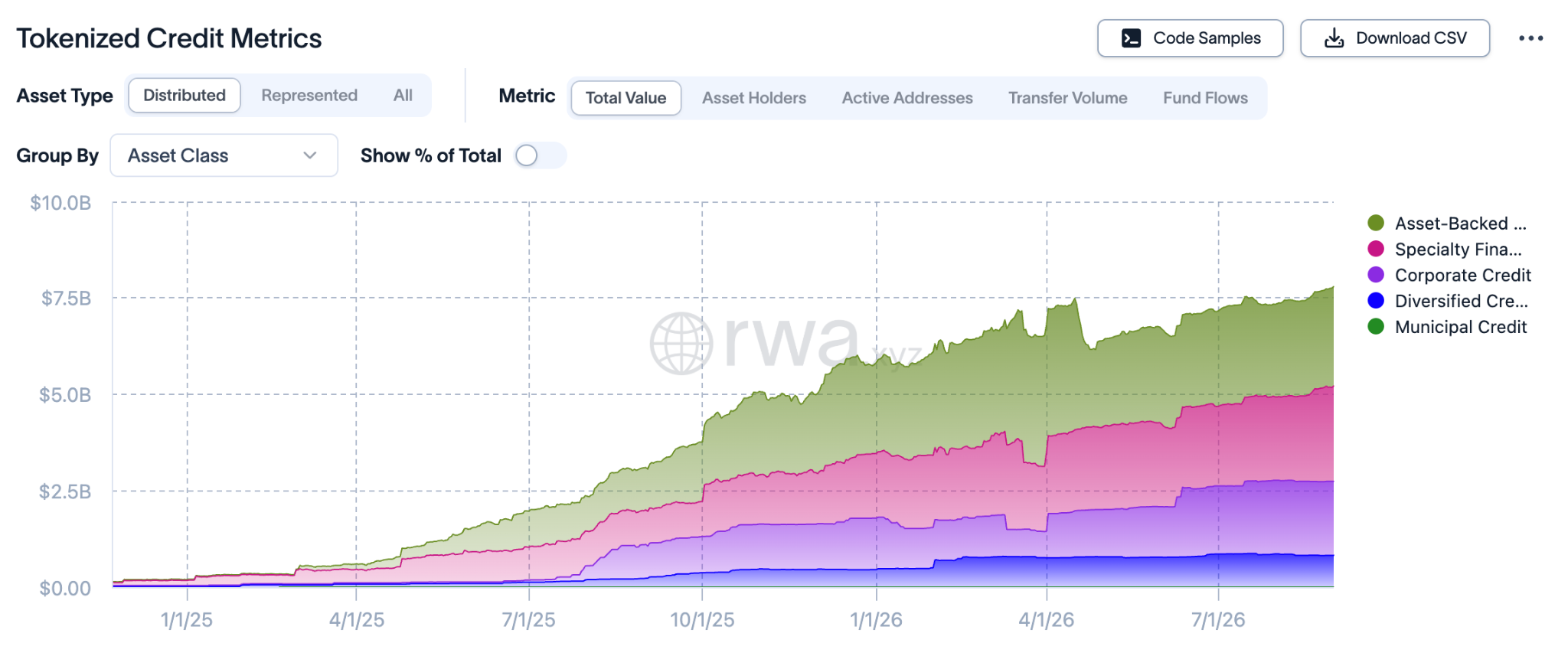
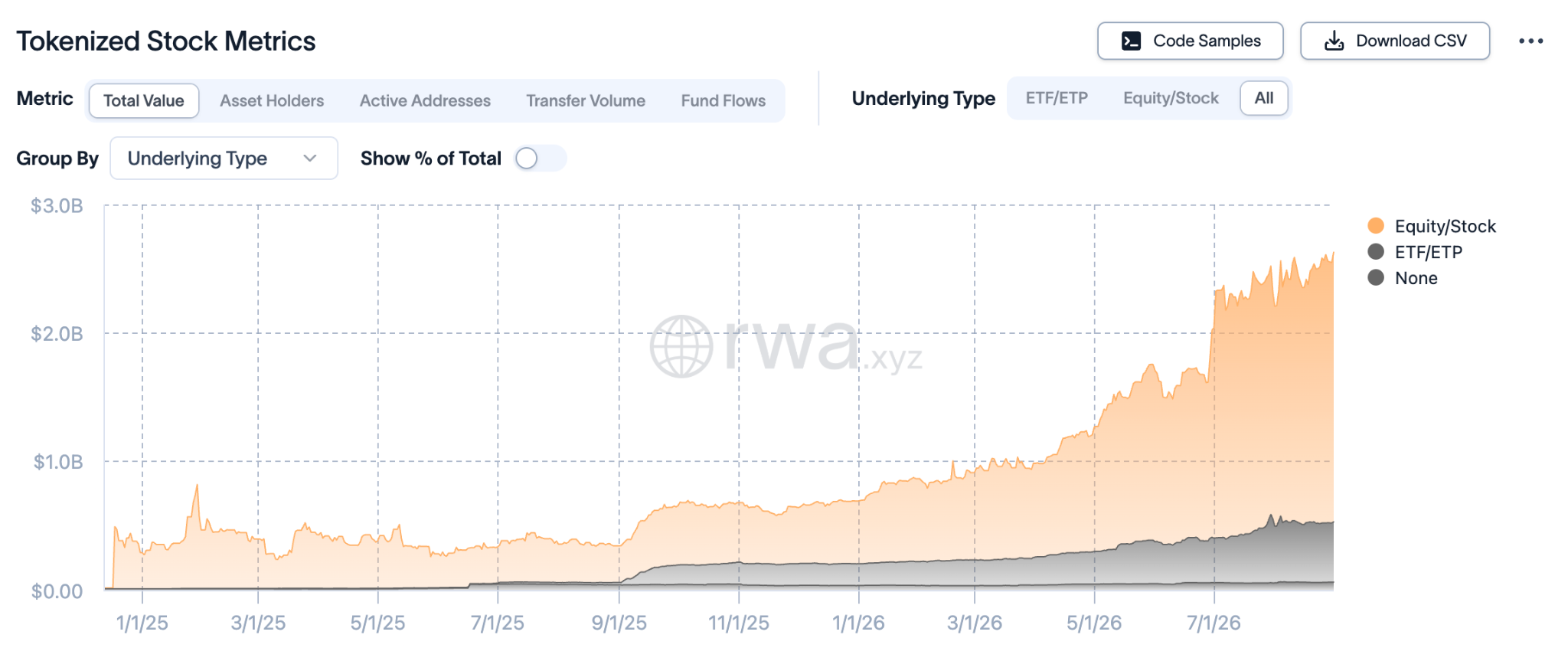
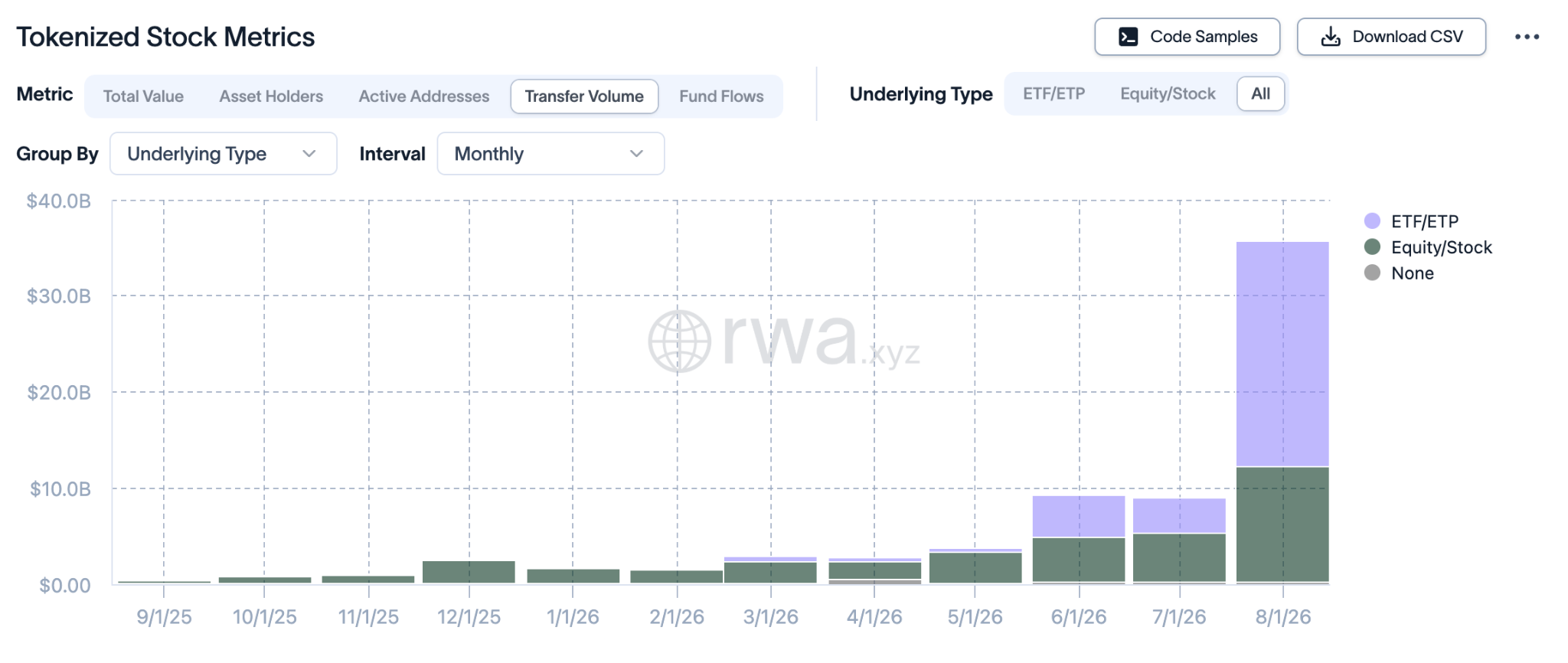
Exponenciální adopci tokenizace napříč třídami aktiv dokládají tvrdá tržní data z platformy rwa.xyz:
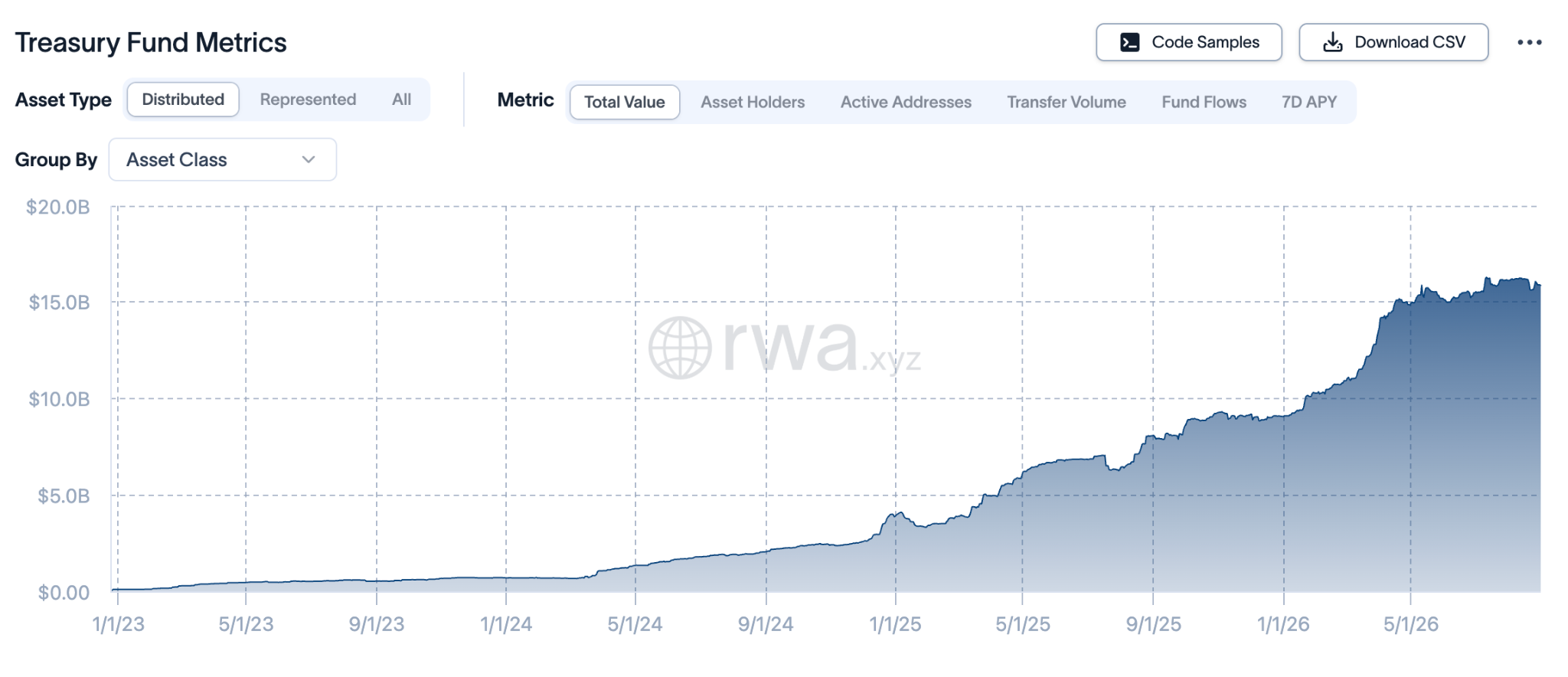
Skutečná magie tokenizace se však neprojevuje v pouhém držení akcií či dluhopisů v digitální peněžence. Průlom spočívá v komponovatelnost (composability).
V tradičním světě je státní dluhopis nebo akcie Apple pro běžného investora víceméně statickým aktivem – leží u custodiana a maximálně generuje dividendu či úrok. Zatímco největší institucionální hráči a velcí investoř měli možnosti pokročilé práce s kolaterálem přes repo trhy či prime brokerage odjakživa, tokenizace tyto nástroje poprvé demokratizuje a otevírá je i malým a středně velkým investorům. V tokenizovaném ekosystému se totiž z téhož dluhopisu či akcie stává plně produktivní kolaterál pro kohokoliv. Investor může tokenizovaný státní dluhopis (generující např. 5% výnos) současně zastavit (použít jako kolaterál) v úvěrovém protokolu, získat vůči němu stablecoinovou půjčku a tu dále alokovat. Tokenizace tím odemyká dříve uvízlou likviditu, zvyšuje rychlost oběhu kapitálu a vytváří z pasivních aktiv stavební kameny nového finančního systému. Tento posun má však i svou odvrácenou stranu: zásadním způsobem zvyšuje nároky na finanční gramotnost samotných uživatelů a zároveň do finančního systému zanáší vyšší míru pákového efektu (leverage), což při tržních výkyvech exponenciálně zvyšuje riziko systémové nestability a řetězových likvidací.
Zatímco většina kryptoměnových sektorů staví finanční aplikace víceméně uzavřené v digitálním světě, DePIN (Decentralized Physical Infrastructure Networks) představuje přímé přemostění blockchainu s reálnou ekonomikou. Z pohledu institucionálního výzkumu spočívá jeho hlavní přínos v přímém propojení poskytovatelů s uživateli bez drahých zprostředkovatelů a zefektivnění kapitálových výdajů (CapEx). Tradiční budování fyzické infrastruktury – ať už jde o telekomunikační sítě, kartografii, satelitní senzory nebo výpočetní centra – vyžaduje od korporací obrovské počáteční investice, složitou byrokracii a roky náročné výstavby na zelené louce. DePIN tento zkostnatělý model obrací naruby. Využívá kryptoměnové motivace k tomu, aby počáteční náklady na nákup a provoz hardwaru přenesl na globální komunitu jednotlivců a menších firem. Výsledkem je schopnost koordinovat tisíce anonymních aktérů a vybudovat globální sítě za zlomky tradičních nákladů a v čase, kterému zavedení monopolní hráči nemohou konkurovat.
Srdcem celé této infrastrukturní architektury je takzvaný DePIN setrvačník (Flywheel effect), který řeší klasický problém „slepice a vejce“ u nově vznikajících sítí. V rané fázi, kdy ještě síť nemá žádné platící zákazníky, protokol distribuuje tokenové odměny provozovatelům hardwaru. Tato inflační pobídka vytváří silný ekonomický stimul pro rychlé vybudování sítě na straně nabídky (supply-side bootstrapping). Jakmile síť díky komunitě dosáhne kritické hustoty, pokrytí a spolehlivosti, začne přitahovat reálné B2B zákazníky z tradičního světa, kteří si kupují její služby za výrazně nižší ceny než u cenově předražených korporátních monopolů. Příjmy od platících zákazníků následně generují reálnou poptávku po native tokenu (či jeho pohlcování skrze deflační burn mechanismy). To zvyšuje jeho tržní hodnotu, dále posiluje atraktivitu odměn pro nové provozovatele hardwaru a celý růstový cyklus se exponenciálně zrychluje.
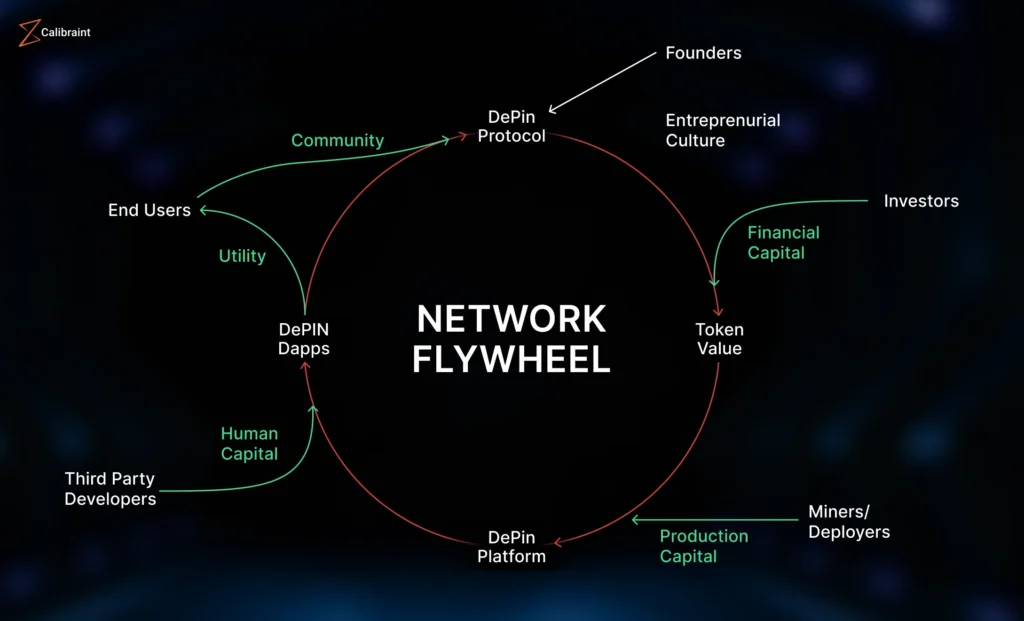
Zdroj: https://token-ventures.com/rise-of-depin-new-real-world-economy/
Tato teoretická koncepce už dávno nezůstává na papíře a přináší hmatatelné výsledky napříč klíčovými odvětvími. V telekomunikacích dokázal projekt Helium po přechodu na vysokorychlostní blockchain Solana transformovat původní IoT síť na komerčně funkční 5G infrastrukturu. Díky masivnímu pokrytí a partnerství s gigantem T-Mobile síť dnes reálně vykrývá hluchá místa tradičních operátorů a provádí zúčtování datových přenosů v reálném čase přímo on-chain. V oblasti kartografie představuje Hivemapper přímou, vysoce efektivní alternativu ke Google Street View – tisíce běžných řidičů vybavených speciálními auto-kamerami mapují miliony kilometrů silnic v reálném čase a dodávají čerstvá 4K data logistickým společnostem i vývojářům autonomních vozidel s nesrovnatelně vyšší frekvencí aktualizací.
Stejná logika funguje i v oblasti digitálních zdrojů a umělé inteligence. Protokol Grass agreguje nevyužitou kapacitu internetového připojení běžných uživatelů a buduje z ní masivní decentralizovanou síť pro sběr a čištění veřejných webových dat – tedy kritického paliva pro trénování velkých jazykových modelů (LLM). Na přesná geolokační data se zaměřuje Geodnet, jehož globální síť GNSS stanic poskytuje RTK korekční data a zpřesňuje standardní GPS navigaci z metrů na pouhé centimetry, což je klíčové pro autonomní zemědělské stroje, stavitelství či dronovou logistiku. A v neposlední řadě Aethir řeší celosvětový kritický nedostatek čipů agregací nevyužitého výpočetního výkonu špičkových GPU karet z enterprise datových center a jejich pronájmem AI startupům i cloudovým herním vývojářům za zlomkové ceny.
Navzdory tomuto obdivuhodnému operativnímu pokroku čelí sektor DePIN z analytického pohledu jedné zásadní výzvě, kterou je skrytá křehkost jeho tokenomiky. Většina raných projektů totiž svůj počiáteční růst postavila na masivní tokenové inflaci. Tyto pobídky sice dokázaly v rekordním čase přilákat tisíce provozovatelů hardwaru či poskytovatelů dat, avšak v momentě, kdy reálná poptávka platících zákazníků nerostla rapidním tempem, narazil celý systém na neúprosnou ekonomickou realitu. Operátoři uzlů totiž musí z nečeho hradit své reálné provozní náklady – elektřinu, nájem datového centra či pořizovací cenu techniky. Odměny získané v podobě volatilních nativních tokenů proto okamžitě po jejich připsání vrhají na volný trh, čímž vytvářejí trvalý prodejní tlak. Pokud se tento proces nepodaří včas vyvážit, cena tokenu kolabuje, motivace komunity opadá, zařízení se odpojují a slibně rozjetý setrvačník se dostává do sestupné spirály. Tento problém navíc prohluboval často fakt, že reálné tržby od korporátních klientů často přitékaly na bankovní účty tradiční vývojářské entity držící intelektuální vlastnictví, takže větší část ekonomické hodnoty zachycovali akcionáři, zatímco držitelé tokenu zůstávali bez přímého nároku na celý zisk a spoléhali jen na mechanismus (buybacků či spalování tokenů) daného projektu. Nyní se hledá ideální řešení, jak tento model a tokenomiků projektů lépe nastavit.
Pokud existuje odvětví, kde krypto bezdebat předčilo tradiční média i klasický analytický průmysl v rychlosti a přesnosti zpracování dat, jsou to predikční trhy. Jak jsem již podrobněji rozebíral v článku Predikční trhy mění oceňování budoucnosti, tyto platformy představují zásadní posun od pasivního konzumování zpráv k aktivnímu oceňování pravděpodobností. Z analytického pohledu do finančního ekosystému přinesly to, co v něm dlouho chybělo – mechanismus, který nutí účastníky vložit do svých tvrzení vlastní kapitál (skin in the game).
Úspěch platforem, jako je Polymarket či Kalshi, ukázal neúprosnou ekonomickou logiku: finanční motivace může lépe čistit trh od ideologického balastu a mediálního šumu. Zatímco tradiční průzkumy veřejného mínění, političtí komentátoři nebo analytické domy často selhávají pod tíhou vlastních metodických chyb či narativních preferencí, decentralizované predikční trhy fungují jako neustále aktualizovaný, globální agregátor informací. Ať už jde o výsledky prezidentských voleb, kroky centrálních bank, geopolitické konflikty nebo technologické milníky, trh dokáže reagovat na nové události v řádu sekund a promítnout je do reálné pravděpodobnostní ceny.
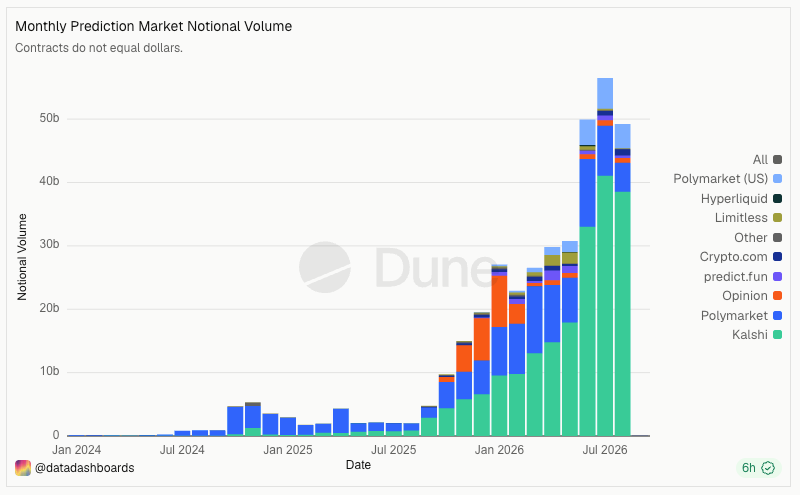
Zdroj: https://dune.com/datadashboards/prediction-markets
Zatímco v minulosti byly predikční trhy vnímány spíše jako krypto-aktivita na pomezí hazardu a spekulace, dnes se proměňují v respektovaný infrastrukturní nástroj. Klíčové přínosy, které z nich činí plně funkční segment, lze shrnout do následujících bodů:
Predikční trhy tak dokázaly, že blockchain není jen účetní kniha pro převod tokenů, ale i extrémně efektivní kolektivní mozek. Ukazují kryptoměnovou infrastrukturu v té nejčistší podobě – jako otevřený, nepřetržitě fungující tržní mechanismus, který mění dohady a spekulace v přesná, cenově vyjádřena data.
Když se oprostíme od cenových výkyvů a spekulativního hluku, který dominuje veřejné debatě, ukazuje se, že krypto ekosystém v roce 2026 konečně dozrál do podoby robustní infrastruktury s reálným product-market fitem. Blockchain se stal nezastupitelnou vrstvou digitální důvěry pro instituce, stablecoiny přepisují globální platební systém a stávají se nástrojem finanční inkluze i existenčního přežití v hyperinflačních ekonomikách, tokenizace RWA odemyká likviditu uvězněnou v pasivních aktivech, DePIN dokazuje, že komunitně koordinovaný kapitál dokáže konkurovat korporátním monopolům, a predikční trhy nabízejí přesnější obraz budoucnosti než tradiční analytické domy. Společným jmenovatelem všech těchto pilířů není hype, ale měřitelná ekonomická hodnota – úspory nákladů, rychlejší zúčtování, širší přístup a efektivnější alokace kapitálu. Krypto tak přestává být sázkou na budoucnost a stává se tichou, ale nezvratnou transformací finanční a technologické infrastruktury.
Zdroj: Odborný článek ve spolupráci s výzkumným týmem Token Ventures
Token Ventures
Token Ventures je společnost, která uplatňuje hybridní investiční strategii v oblasti Web3. Projekty podporujeme jak formou venture kapitálu v raných fázích, tak prostřednictvím likvidních investic na sekundárních trzích. Kromě poskytování kapitálu jsme aktivními účastníky ekosystému: díky našim hlubokým odborným znalostem v oblasti DeFi aktivně spravujeme vlastní aktiva prostřednictvím různorodých on-chain strategií a poskytujeme praktické poradenství, kterým napomáháme našim projektům a partnerům k úspěchu. Pravidelně také publikujeme vlastní tržní analýzy a odborné články.