
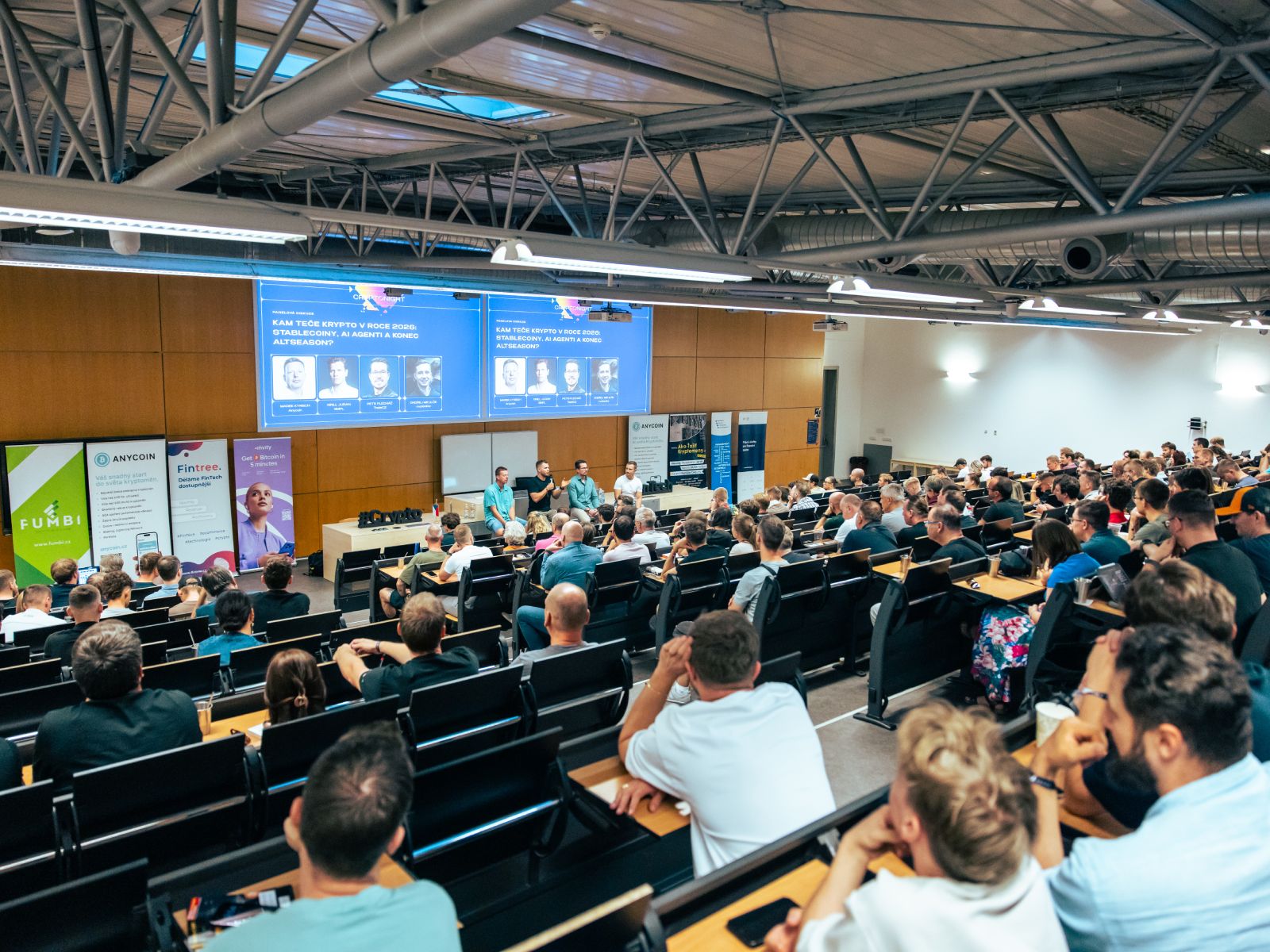
The sixth annual CryptoNight highlighted just how much the cryptocurrency world has transformed in recent years. Instead of questioning whether crypto will survive, the focus shifted to how banks will offer it, what MiCA brings to the table, and where stablecoins will find their utility.
The last Thursday in August at Mendel University in Brno belonged to cryptocurrencies. The sixth annual CryptoNight brought together representatives from crypto firms, traditional finance, regulatory bodies, and the investment community. And while the evening covered Bitcoin, stablecoins, AI agents, and the future of altcoins, one common theme ran through most of the program: crypto is increasingly becoming a part of the regulated financial world.
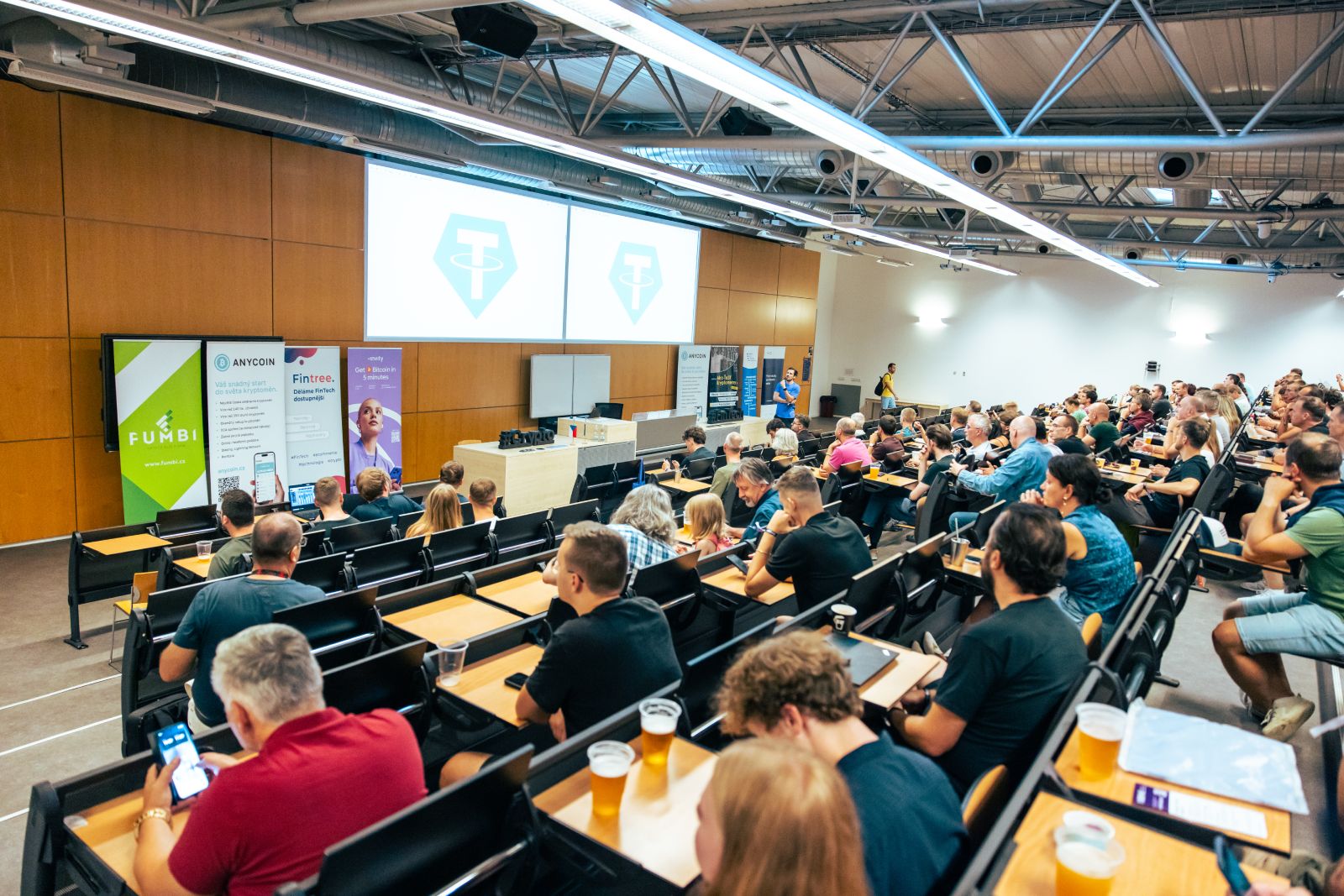
This was clearly evident in the opening lecture by Juraj Forgács from Fumbi. He focused on the initial impacts of the European MiCA regulation. According to data presented at CryptoNight, the market has narrowed significantly since the new regulation took effect—out of 3,255 original registrations, only 297 companies held a MiCA license at the time of the conference. Forgács did not view the regulation merely as an administrative hurdle. He highlighted, for instance, the separation of client and corporate assets, rules for asset custody, and requirements for qualified investment services. The result is intended to be a safer environment for the client, albeit at the cost of higher expenses for the providers themselves.
The regulation topic was followed by a panel titled "MiCA is here. Will banks dive into blockchain?", featuring Denisa Slavíčková from the Czech National Bank and Ondřej Gocman from Hobza Legal, moderated by Štěpán Kouba. The debate showed that banks entering the crypto space is not just a matter of technological integration with an exchange. Before launching such a service, a bank must address regulatory, security, and client risks for hundreds of thousands of customers, many of whom have no prior experience with cryptocurrencies.
The banking sector itself well illustrates how quickly the status of cryptocurrencies has changed. This topic was also addressed by Jakub Valníček from Portu in his lecture Czechia vs. Bitcoin – from hate to love. He recalled that Czechia was at the forefront of several significant Bitcoin projects from the very beginning—the first public mining pool, Slush Pool, and the first commercially available hardware wallet, Trezor, were both created here. This was followed by a period when banks often took a very cautious stance toward crypto firms. Today, by contrast, Bitcoin is gradually making its way directly into the product offerings of traditional financial institutions.
After covering regulation and banking, the second half of the program shifted its focus toward the market itself. Matouš Ledvina from Invity looked back at the history of Bitcoin, recalling the many crises the ecosystem has weathered—from Mt. Gox and the collapses of Celsius and FTX to ongoing debates about centralization and secure cryptocurrency custody.
He also highlighted the growing institutional ownership of Bitcoin. According to data in his presentation, there are over 170 "treasury companies" holding a combined total of more than 1.24 million BTC. Alongside institutional adoption, custody and the ability to maintain self-custody of one's assets remain critical topics—a point he symbolically underscored with the well-known mantra: “Not your keys, not your coins.”
The future of the market was then debated by Marek Kyrsch from Anycoin, Kirill Juran from smpl_, and Petr Plecháč. While many topics were covered, one of the evening's most prominent takeaways was a simple distinction: Bitcoin is increasingly positioning itself as an investment asset, while stablecoins are finding their place as a medium for payments and settlement. According to the panelists, stablecoins are gradually moving from a purely crypto-native environment toward mainstream financial services.
CryptoNight maintained its informal character again this year. The professional program was followed by a traditional afterparty featuring a barbecue, themed drinks, music, beer pong, and networking, where discussions from the lecture hall continued in a much more relaxed setting.
The side program also included a competition for Trezor hardware wallets. The conference venue also hosted a booth for the Jednadvacetproject, an informal network of local Bitcoin communities that connects Bitcoiners, promotes Bitcoin adoption, and operates resources such as a map of Bitcoin-friendly venues and a calendar of community events.
The sixth annual CryptoNight perhaps best captures the shift that the entire sector is currently undergoing. The debate is no longer primarily about whether traditional finance will adopt Bitcoin and other digital assets. The focus is increasingly shifting to how they will offer them to clients, how they will integrate them into a regulated environment, and which parts of the cryptocurrency infrastructure will ultimately become a standard part of financial services. And it was precisely this connection between the original Bitcoin community, crypto firms, banks, and regulators that was perhaps more visible at this year's CryptoNight than ever before.